Have you ever looked at a beautifully organized, color-coded bullet journal and thought, “That’s it. That’s the secret to my life falling into place”?
So you buy the pens. You sit down to create the perfect pages. And for a few days, it feels amazing.
But then life happens.
The schedule gets busy. The pages get harder to keep up with. What started as a helpful tool begins to feel like another thing asking for your attention.
Now, bullet journals are wonderful for many people. For some, they bring clarity, creativity, and a sense of calm. But for others (like me), a system that requires constant maintenance can eventually become another chore.
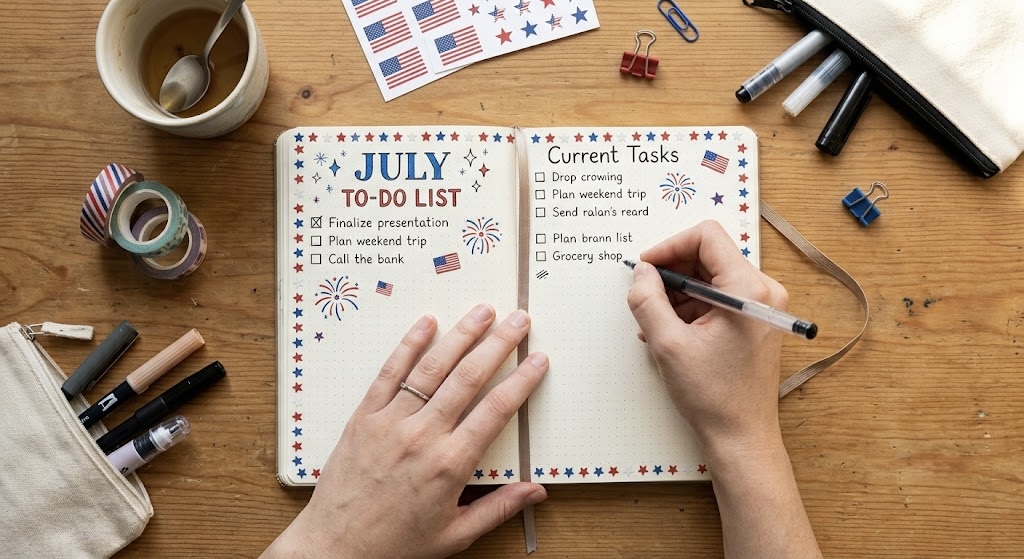
That is structure for the sake of structure. And honestly, it can be exhausting.
When our homes feel chaotic, our first instinct is usually to add more structure. We think we need stricter chore charts, perfectly timed morning routines, or a complete organizing overhaul. We assume that if we can just create the right system and follow it consistently enough, the chaos will finally stop.
But sometimes the issue is not that we need a better organizing method. It is that we are trying to solve the wrong problem. Many organizing systems fail because they focus on creating order without considering how a home actually functions in everyday life.
But real life does not stay neatly contained.
The problem is not always that we need more structure. Sometimes we need a better way to recover.
Your home doesn’t need a flawless system that never breaks down. It needs household routines and home systems that help it come back together when life gets messy.
The Myth of the Perfectly Maintained Home
Here’s the reality: every single home gets behind.
The goal of a good home system is not to create a life where the laundry is always caught up, the sink is always empty, and every room looks ready for a magazine photo shoot.
That home doesn’t exist.
Sports seasons happen. Kids get sick. Work gets overwhelming. Sometimes you spend an unexpected afternoon outside because the weather is beautiful and your family needs the break more than your to-do list needs your attention.
The question is not whether your home will ever fall behind.
It will.
The better question is:
How quickly and easily can your home recover?
Most of the daily stress we feel does not come from today’s mess. It comes from yesterday’s unfinished tasks following us into today.
This is why the most helpful household systems are not the ones that make your home look perfect. They are the ones that quietly reduce the decisions, reminders, and small frustrations that build up throughout the day.
The dishes left overnight. The shoes scattered by the door. The papers that have slowly gathered on the counter.
Recovery habits are the gentle safety nets that catch you when real life happens.
A recovery habit is a small household routine that helps your home return to a comfortable baseline after the normal disruptions of everyday life. It is not about preventing every mess. It is about making it easier to begin again.
Rhythms, Not Rules
Recovery habits are not rigid schedules that dictate every moment of your day.
The best household routines do not need to control your life. They simply create reliable rhythms you can return to when things get off track.
Often, these rhythms work best when they are connected to transitions rather than specific times.
After dinner. When everyone walks through the door. Before leaving the house. Before going to bed.
These moments naturally repeat, making them easier to build into family life.
Your reset points do not have to look exactly like mine. The goal is not to copy someone else’s routine. It is to create simple points of recovery that support the way your family actually lives.
Here are a few examples:
Daily Reset Points
A Kitchen Reset:
This does not have to mean a deep clean every night. For some families, it may simply mean dishes are handled after dinner and counters are cleared so the next morning starts with less friction.
An Entryway Reset:
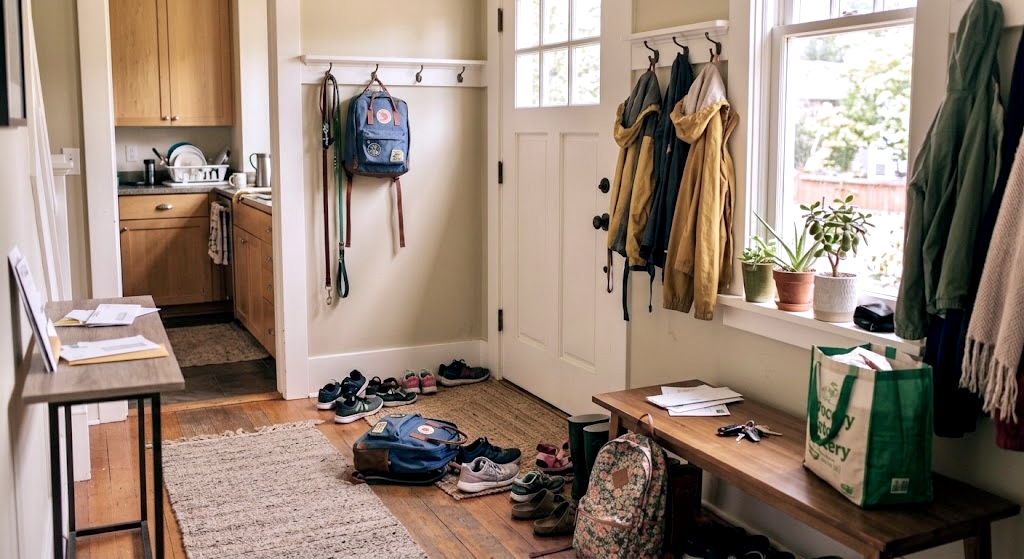
The entryway often becomes the landing zone for everything coming and going—shoes, backpacks, coats, sports gear, and papers. A simple reset point here can keep the clutter from spreading throughout the house.
An Evening Closing Routine:
Borrowed from the restaurant industry, a closing routine is simply a quick sweep that prepares your home for tomorrow. You are not trying to finish every task before bed. You are giving tomorrow-you a better starting point.
Weekly Reset Points
The Weekly Home Reset:
A weekly reset is a small opportunity to look ahead, clear out the things that accumulated, and prepare your home for the week to come. This might include checking the calendar, dealing with paper piles, restocking essentials, or resetting spaces that need attention.
The Catch-Up Laundry Basket:
This is one of my favorite examples of containment over urgency.
In our laundry/mudroom, we have a communal basket for things that do not need immediate attention. Stray socks left in the living room? They go in the basket. Wet towels after playing outside? They go in the basket. Damp gloves after a winter afternoon? They go in the basket.
Everyone understands that anything in this basket is not a priority. It will get washed when there is extra space in a load—usually every week or two, or whenever life gives me a little margin.
The goal is not to eliminate every unfinished task. The goal is to give unfinished tasks a place to wait.
Monthly and seasonal resets—like switching out clothes, editing toys, or refreshing the pantry—are simply larger versions of these same ideas. They work best when your home already has small recovery rhythms built into everyday life.
These larger resets are not about creating a completely new system every season. They are opportunities to pause, notice what is no longer working, and make small adjustments so your home can continue supporting your family’s current season of life.

Grace in the Recovery
If a system takes more energy to maintain than the peace it creates, it is not helping your home. It is becoming another obligation. A good household routine is not one you follow perfectly. A good home system is one you can return to.
The success of your home is not measured by how well you stay on script. It is measured by how easily your family can find its way back when life gets busy. Instead of asking, “How can I keep my house from ever getting messy?” try asking:
“How can I make it easier for my home to recover?”
This week, choose one small place in your home that could recover a little more easily.
Start there.