Summer sounds amazing until about Day Three, when you realize you’ve answered “what’s for lunch” four times before noon and someone is already asking about a snack twenty minutes after breakfast. Feeding kids is not hard. Feeding kids all day, on repeat, while trying to do anything else with your life is the kind of slow drain that can make you dread your own kitchen.
The problem isn’t the food. It’s the deciding. Every “can I have a snack” and “what should I eat” is a small withdrawal from your mental energy, and by 2pm you’re running on empty. The fix isn’t a perfect meal plan or a Pinterest-worthy snack board. It’s a simple system that moves the decision-making off your plate — so your kids know what to do without asking you every single time.
Here’s how to build one.
Stop Making Breakfast a Question
If your kids are old enough to pour cereal, they’re old enough to handle breakfast on their own on weekday mornings. This is the lowest-hanging fruit in your whole summer food situation, and it’s worth establishing as a clear expectation from day one.
That doesn’t mean you disappear — it means you set the parameters in advance. Pick three or four things that are always available and always approved: cereal, toast, yogurt, fruit, whatever works for your family. Put them somewhere accessible. Tell your kids once, clearly: on weekday mornings, breakfast is yours to handle.
The key word there is expectation. Not “you can make your own breakfast if you want” — that still puts the decision on you. More like “weekday breakfasts are independent, here’s what’s available.” When it’s framed as a household norm rather than an option, kids stop asking and just do it. It might take a few days of redirecting, but it sticks.
Weekends can be more flexible — sometimes you want to make pancakes, sometimes everyone’s grabbing something on the way out the door. That’s fine. The point is that weekday mornings don’t require you to field questions before you’ve finished your coffee.
Decide Lunch Before Lunch Happens
The “what’s for lunch” spiral usually starts around 10:30am and peaks right when you’re in the middle of something else. The reason it’s so draining isn’t the lunch itself — it’s being asked to make a decision you haven’t thought about yet, under pressure, while someone hovers.
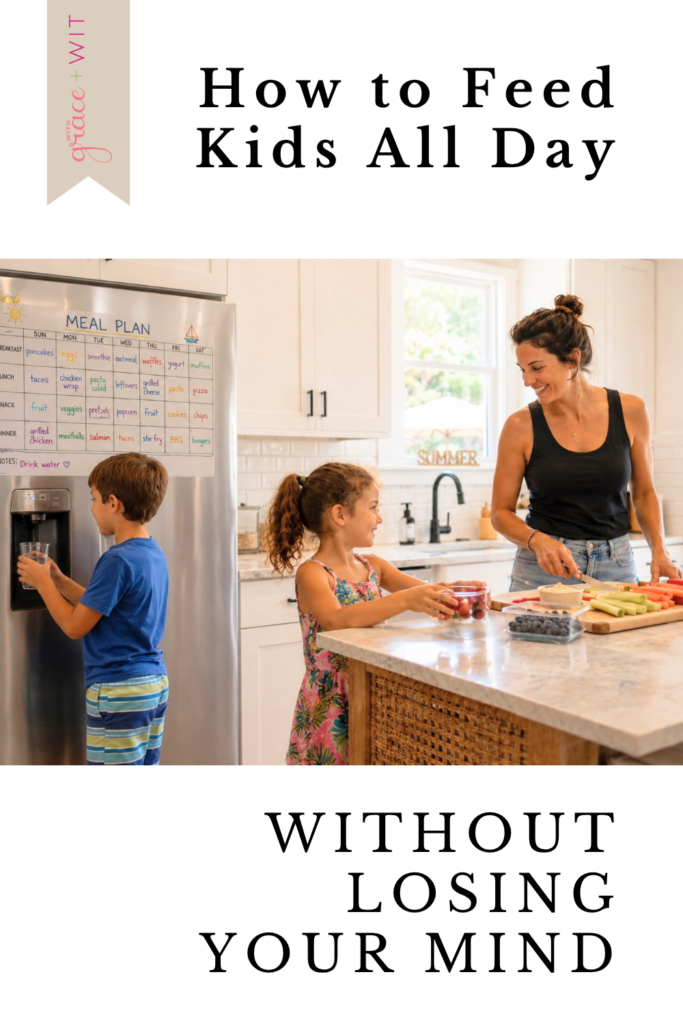
The fix is deciding in advance. This can look different depending on how your household runs, but a simple version is a weekly rhythm: certain days have a standing lunch (sandwiches on Mondays, leftovers on Tuesdays, etc.), and kids know it ahead of time. You don’t have to be rigid about it, but having a default removes the daily negotiation.
On sandwich days? Kids make their own. That’s a reasonable expectation for elementary age and up, and it’s one less thing you’re doing. On leftover days, it might be a two-minute task for you or it might be something they can reheat themselves — depends on the age and what’s in the fridge. The point isn’t who makes the food. The point is that someone already knows what’s happening before hunger strikes.
A weekly meal calendar on the fridge, even a rough one, does a surprising amount of work here. It’s not about being a planner — it’s about having an answer ready so you’re not inventing lunch from scratch every single day.
Build a Snack Zone and Get Out of the Way
Snacks are where the decision fatigue really compounds, because they happen more often and they feel more optional — like every request requires you to assess whether this snack is appropriate right now.
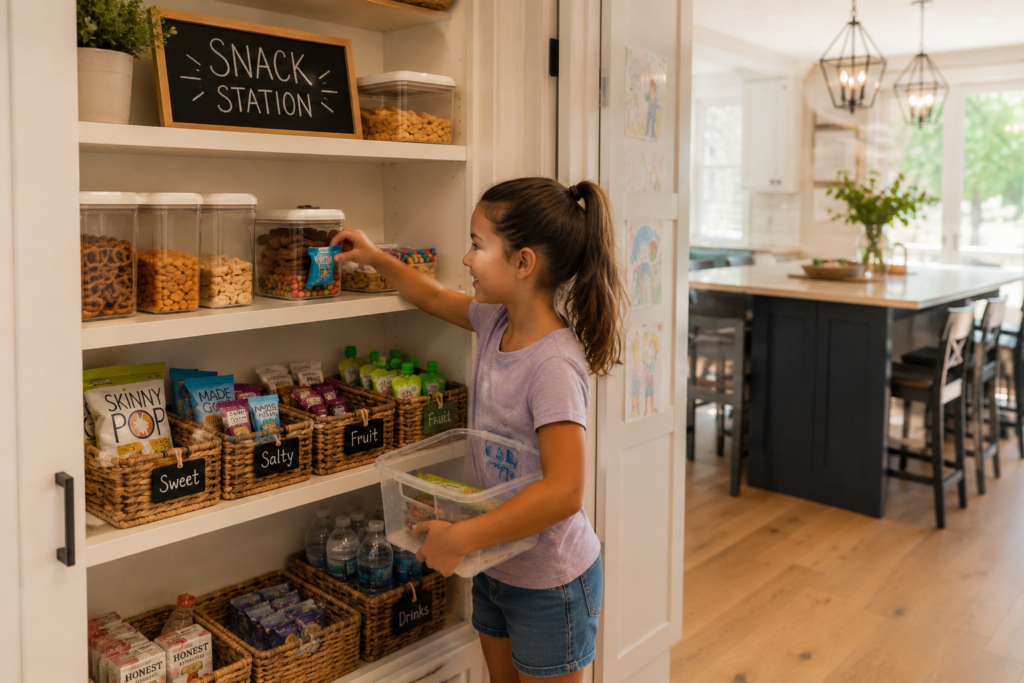
Here’s the system that actually works: one designated spot with approved snacks, accessible without asking you. A low pantry shelf, a basket on the counter, a specific section of the fridge. Stock it at the start of the week. Tell your kids where it is and that they can access it freely — within one simple limit, like nothing in the hour before a meal.
That’s the whole thing. “Go check the snack zone” becomes a complete sentence. You’re not rationing food or being strict — you’re just not personally approving every cracker that gets eaten in your house.
Keep what goes in it simple. A handful of reliable options you’re genuinely fine with them eating — fruit they can grab and go, crackers they can portion out themselves, whatever your family actually eats. If your kids are old enough to be doing this independently, they’re old enough to get out a paper towel and count out some chips, or cut an apple if that’s what they want. That’s not extra work, that’s the point. You’re building the habit of feeding themselves, not just handing them a pouch. You don’t need variety for the sake of it — a few solid options that rotate is plenty.
If you’re looking for a way to make restocking the snack zone and prepping their own lunch feel like a normal part of summer rather than a battle, a simple daily to-do list does a lot of that work — here’s how we use one to build independence all summer long.
The Through-Line Is Decisions Made in Advance
Whether it’s breakfast, lunch, or snacks, the system is the same: figure out the parameters ahead of time, communicate them clearly, and then let the system do the answering instead of you.
This is how running a household efficiently actually works. It’s not about being strict or over-scheduled. It’s about making one decision — “here’s what breakfast looks like, here’s what’s in the snack zone, here’s what Tuesdays are for lunch” — instead of making the same decision over and over again in real time.
You can add this to the rhythm of summer chores, too. Restocking the snack zone, making their own lunch, clearing up after breakfast — these are reasonable contributions for kids who are old enough to eat independently. It’s not about offloading work onto them. It’s about building a household where everyone knows their role, including at mealtime.
Adjust When It Stops Working
No system survives contact with July perfectly intact, and that’s fine. Your kids get older every summer. What felt like a stretch last year is easy now. What worked when you had a seven-year-old doesn’t necessarily work when you have a ten-year-old who can use the microwave.
If the food systems feel like just one piece of a bigger summer chaos problem, that’s usually because they are. Getting the whole day to run without you managing every hour of it is its own project — this post on summer anchors is where I’d start.
Check in mid-summer if something’s feeling broken. Is the snack zone getting raided before dinner every night? Adjust the rule. Are the lunch options boring everyone? Refresh the rotation. Is one kid ready for more independence than you’ve given them? Hand it over.
This is the part that doesn’t get talked about in most “systems” advice — the system isn’t the point, the outcome is. The outcome is a summer where you’re not spending your mental energy on food logistics from morning to night. If something isn’t getting you there, change it.
The Short Version
Set independent breakfast as a weekday expectation and stock the options in advance. Decide what lunch looks like before 10:30am hits — a rough weekly rhythm is enough. Create a snack zone kids can access without asking, with one simple rule about timing. Make the decisions once, in advance, instead of on demand all day.
You’ll still feed your kids plenty. You’ll just stop being the live help desk for every hunger question between June and August. That mental space is worth setting up for.