The first thing to change isn’t your motivation—it’s your expectations.
If you’ve ever looked around your house and thought, “everything feels chaotic,” it’s worth pausing on what that actually means. Most of the time, it isn’t just about the mess or the schedule or how much is happening in a given week. It’s about the feeling that things are slipping out of your ability to manage them in the way you expect.
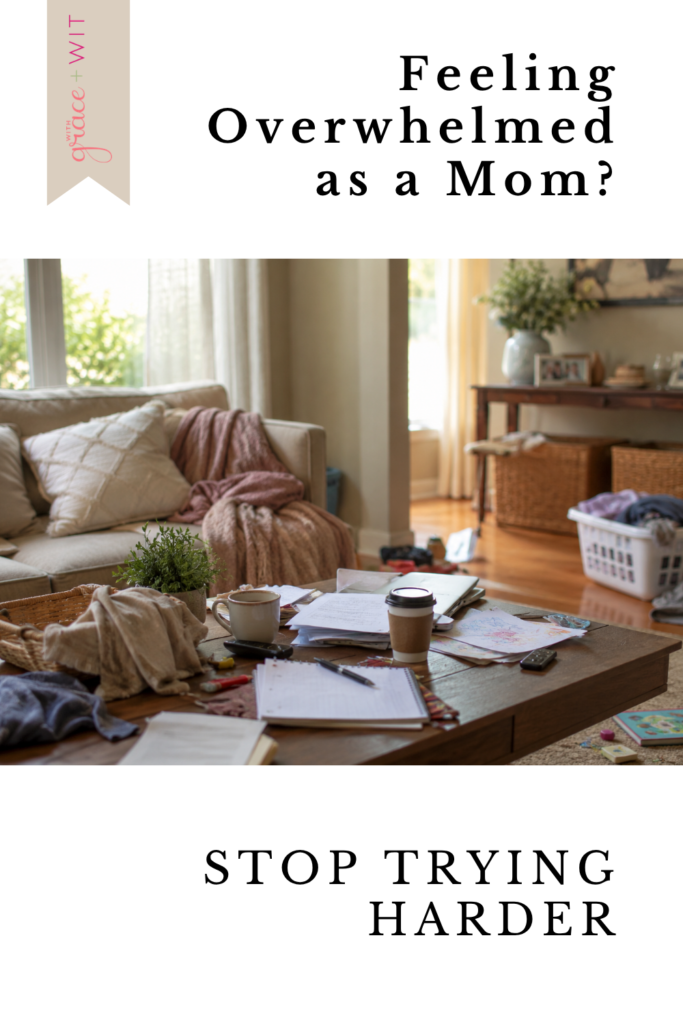
There is also a deeper layer to this that I’ve written about before in Why Your House Feels Overwhelming Even When It’s Clean. Sometimes the house isn’t actually the problem. The pressure is.
Summer tends to bring all of this into focus. Kids are home more, routines loosen, bedtimes shift, and the structure that quietly holds everything together during the school year starts to stretch. Even good things—vacations, late nights, flexible days—can add up to a sense that nothing is quite landing where it should.
When that happens, the instinct is usually to try harder. We rebuild the schedule. We create a new system. We decide that if we could just be more disciplined, more organized, more intentional, everything would settle back into place.
But in most seasons like this, the problem isn’t effort. It’s expectation.
What “done” actually looks like
A while ago, I was helping one of my kids clean their room, and I noticed something small but oddly revealing. I had my version of how the work should unfold. I would start with the bed, get that out of the way, and then move through the rest of the room in a structured order. My child, meanwhile, started somewhere completely different—picking up clothes, shifting things around, working in a way that didn’t match my internal sequence.
For a moment, I felt the familiar pull to correct the process. To explain the “better” way. And then I stopped and asked myself a simpler question: does it actually matter how we get there, as long as we get there?

The answer was no. What we had already agreed on was the outcome. A clean room. The order of operations was not the point.
That idea shows up in more places than we realize. In fact, I explored a similar pattern in Why Staying on Top of Things Is a Terrible Goal for Moms—the idea that “on top of things” often becomes a moving target we keep redefining.
When life feels chaotic, we tend to tighten control around the process instead of clarifying what “done” actually looks like.
Trying harder isn’t always better
Trying harder often looks responsible from the outside. It looks like stepping in and doing everything yourself because you can do it faster or better. It looks like taking over the birthday party planning, making all the food, handling all the details, because it feels simpler than letting things be imperfect.
But over time, it becomes exhausting. Not just because of the workload, but because of the expectation underneath it: that everything has to be done in a specific way in order to be acceptable.
There is a difference between maintaining standards and quietly turning every task into a test of control. When that happens, even simple things start to feel heavy. Not because they are difficult, but because they are rigid.
Sometimes what we call “order” is actually just control with better language around it. And when control becomes the default response to chaos, it rarely creates peace. It usually creates more pressure—for everyone involved.
This is something I go deeper into in Where to Start When Your Home Feels Out of Control—because often the issue isn’t effort, it’s trying to fix everything at once instead of identifying what’s actually creating friction.
Chaos doesn’t create weak systems. It reveals them.
Every home has seasons that expose what is working and what isn’t. Summer is one of them, but so are December, the end of the school year, sports seasons, and any stretch of time where normal routines get interrupted.

In those seasons, it becomes very clear where flexibility is missing. If swimsuits are constantly lost or never dry properly, it isn’t really a summer problem. If everyone is hungry all the time because meals and snacks have blurred together, that isn’t just a busy schedule. If Tuesdays and Thursdays always feel like complete resets because of games or practices, it’s worth asking whether the system assumes more stability than life actually has.
These moments don’t mean everything is broken. They simply show where the system depends too heavily on ideal conditions. And most homes don’t live in ideal conditions, even when things are going well.
The goal isn’t to build routines that only work when everything is calm. The goal is to build ones that still function when life is interrupted.
Three questions to ask when everything feels overwhelming
When a day starts to feel like too much, it can help to step back and simplify the definition of what success even looks like in that moment.
What absolutely has to happen today? In most homes, that list is smaller than it feels. Appointments that can’t be moved, meals that need to happen in some form, and the basic logistics of getting people where they need to be. Everything else can usually be set down long enough to breathe.
What can happen later? Laundry is a good example of this. So is grocery shopping, or cleaning tasks that feel urgent but are actually flexible. A day doesn’t collapse because every task doesn’t get completed on schedule.
And finally: what doesn’t matter this week? This is often where the most pressure is hiding. Not because those things are unimportant in general, but because we’ve quietly elevated them to “must be done now” when they actually have room to wait.
This isn’t about lowering standards. It’s about noticing how many standards are trying to operate at the same time, and choosing which ones actually define “done” in this season.
When moms say everything feels chaotic
When moms say everything feels chaotic, what they often mean is that there is no longer enough space for themselves inside the rhythm of their own lives. Everything is full. Everything is asking for attention. There is no margin left to think clearly or move slowly through decisions.
This is often the point where systems start to break down—not because they were wrong, but because something keeps repeating underneath them. I’ve written about this pattern in Where to Start When Your Home Feels Out of Control, where the real issue is often not the mess itself, but the cycle that keeps recreating it.
Progress isn’t recreating the perfect day
Progress in a season like this doesn’t come from recreating an ideal version of your routine. It comes from deciding, in real time, what actually matters most and letting the rest adjust accordingly.
The goal is not to have a perfect day. The goal is to have a clear one.

And sometimes the most important shift is simply this: before you try harder, make sure you’re actually working toward the right definition of “done.”
Because when life feels chaotic, it’s rarely because you aren’t doing enough. It’s often because too many things have quietly been labeled as “required,” when they were never meant to carry that weight at the same time.
If this is a pattern you recognize—feeling like you’re constantly starting over, constantly catching up, constantly trying to reset without anything really changing—it may be less about the day you’re in and more about the cycle underneath it.
That’s exactly what I walk through in the Repetition Reset. It helps you identify the repeating points of friction that keep recreating overwhelm, so you can stop rebuilding the same systems and start adjusting the decisions underneath them.
You don’t need a completely new home system to start feeling a shift. You usually just need one or two clearer definitions of “done” in the places where things keep breaking down.