Every August, families start looking for the same thing: a back-to-school routine that will make the transition easier.
They search for morning routines that get everyone out the door without yelling. Evening routines that keep backpacks packed and lunches ready. Schedules that somehow make the shift from slow summer days to school-year commitments feel manageable.
But the hardest part of back-to-school is often not creating a better routine.
It is realizing that the routine that worked last year may not be the routine your family needs this year. Because your children are not the same people they were last August. They are older. They are learning new skills. They have different schedules, different activities, and different levels of independence.
A first grader and a fifth grader may both need help getting ready for school, but they do not need the same kind of help. A middle school student may be ready to manage assignments independently but still need reminders about sports equipment (this is where a simple gear system saves everyone from the morning scramble). A high school student may handle their own schedule but need support adjusting to earlier mornings and heavier commitments.
A back-to-school reset is not about creating the perfect morning routine. It is about noticing where your family has changed and adjusting the way you do things so your routines fit the people living in your home now.
Start With What Happens Before the Morning
A peaceful morning usually begins before the alarm goes off. Not because your family needs an elaborate evening routine, but because a few simple habits make the next day easier. (If mornings already feel like a fight before anyone’s even left the house, this might be less about patience and more about decision fatigue.)
Before the school year starts, it helps to talk through what mornings, evenings, and school responsibilities will look like this year:
- Homework goes back into the backpack when it is finished.
- School papers have a place to go instead of moving around the kitchen.
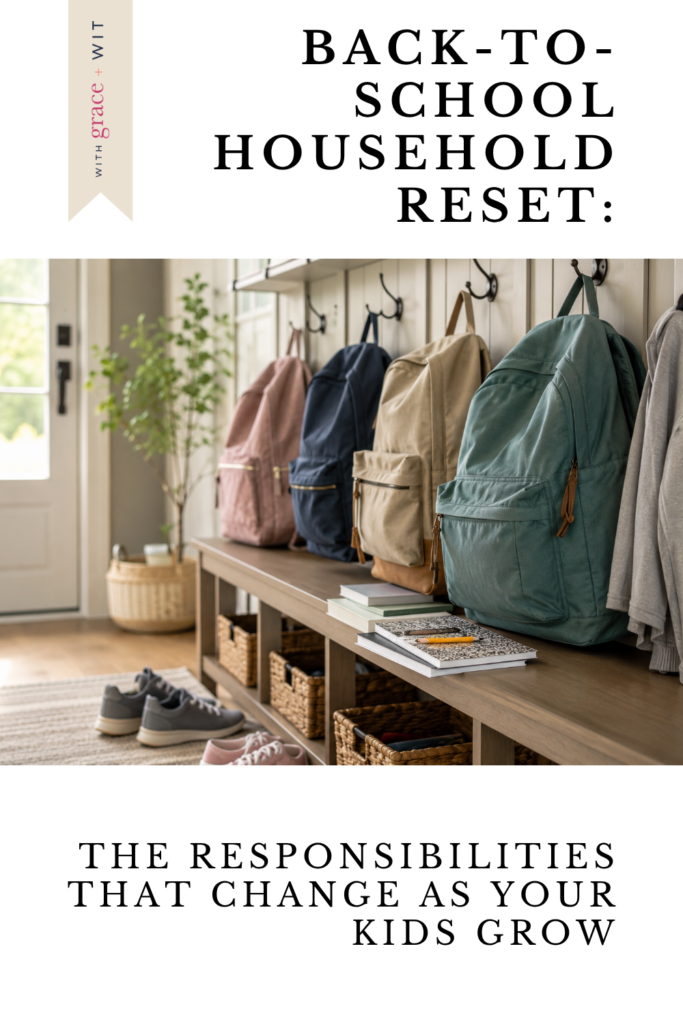
- Backpacks, shoes, and sports equipment have a consistent landing place.
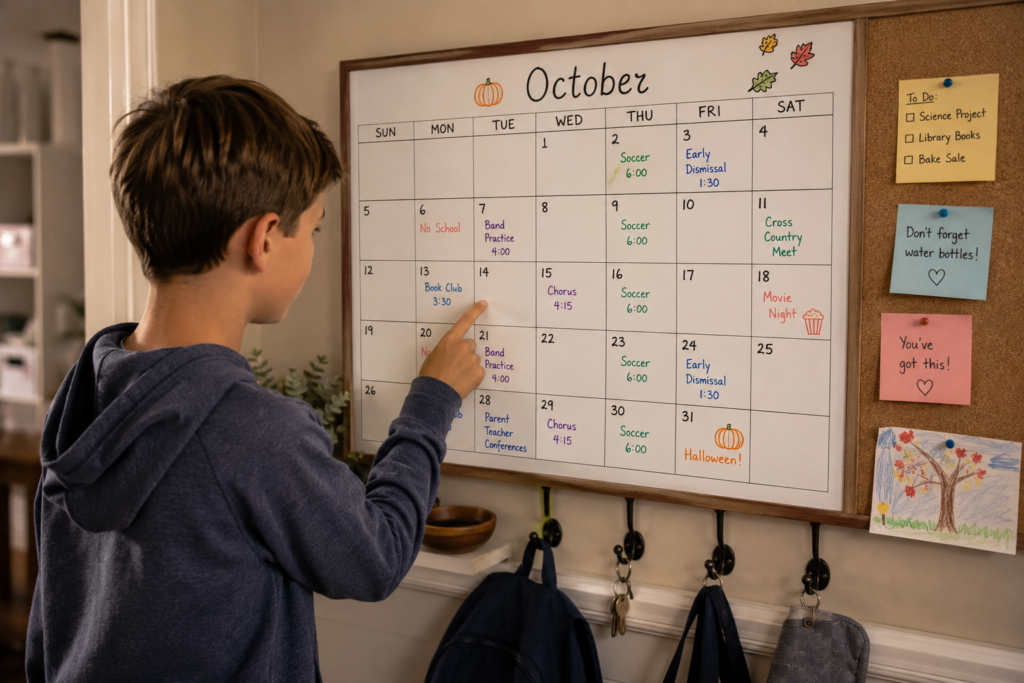
- Tomorrow’s schedule is checked before everyone goes to bed.
These are not complicated systems. They are expectations your family agrees on before the busy season begins. The goal is not to make your home run like a perfectly organized classroom. The goal is to remove the repeated questions and last-minute searches that make school mornings harder than they need to be.
Notice What Your Child Is Ready For This Year
One of the biggest changes that happens from year to year is that children become capable of doing more. The challenge is noticing when they are ready for that next step. Before school starts, ask yourself:
What did I do for my child last year that they may be ready to try themselves this year? What does my child need more practice with before they can handle it independently? What responsibilities still belong to me because they truly require an adult?
The answer looks different at every stage. A younger child may still need help packing a backpack or choosing clothes. An older elementary student may be ready to check their own assignments and prepare what they need for the next day. A middle schooler may be ready to manage their own morning routine but need help creating a plan for activities and homework. A high schooler may handle many daily responsibilities but still need support with bigger-picture planning.
This is the same shift that happens over the summer — a simple to-do list can foster real independence in kids long before the first day of school ever comes around.
Choose a Few Habits Before School Starts
You do not need to create a completely new routine every August. Instead, use this time to decide what habits will make this school year easier — and talk with your children about what will help them succeed. The conversation matters as much as the habit. When children help decide what will work for them, they are more likely to follow through when the excitement of the first week wears off.
What this looks like changes by age:
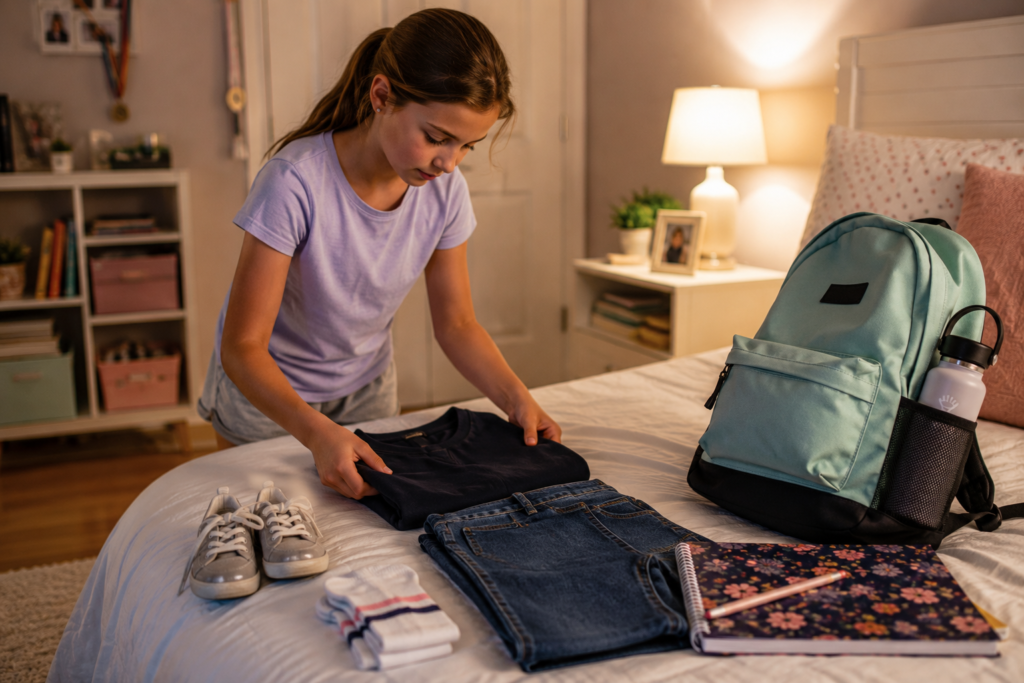
- A first grader might pick out their own clothes the night before, or practice zipping their own backpack.
- A fifth grader might take over checking their own assignment notebook, with a reminder from you until it sticks.
- A middle schooler might decide they focus better showering at night instead of rushing in the morning, and start managing their own homework folder.
- A high schooler might need a better system for tracking practices, assignments, and commitments across a much fuller schedule — and take the lead on building it themselves.
Remember: The First Weeks Are a Transition
Even the best routines need adjusting. The first weeks of school are not just about getting everyone out the door on time — they are about learning a new rhythm.
The weeks before school often bring their own challenges: shopping for supplies and clothes, adjusting sleep schedules, meeting new teachers, wondering who will be in class, and fitting appointments and activities into the last pieces of summer. Then school actually begins. The excitement carries everyone through the first few days. But once the newness wears off, you start to notice what is not working — the same thing that happens about a month into summer, once the novelty of “no school” fades.
If everyone is searching for water bottles every morning, that is information. If homework disappears between the kitchen table and the backpack, or one person is constantly reminding everyone what is happening next — that is information too.
The goal is not a picture-perfect household before the first day of school. The goal is routines that match your family’s current season.
Before school starts, do not ask: “How can I make our mornings perfect?”
Ask: “What does my child need to practice, and what does our family need to adjust so this school year feels manageable?”
That is where calmer school days begin.