We’ve talked about why summer feels like a logistical nightmare. We’ve established the “no-schedule” rhythms and figured out how to feed the kids without becoming a full-time short-order cook. But there is one final hurdle that tends to trip us up somewhere around the second week of July: The Unraveling.
You know the feeling. It’s 8:30 PM. The kids are finally winding down, but the living room looks like a toy store exploded, there’s a stray sprinkler still hosing down the driveway, and you just stepped on a sticky spot on the kitchen floor that you’re 90% sure is blue raspberry popsicle.
In that moment, you have two choices. You can spend two hours scrubbing the house until it’s “perfect,” only to have it destroyed by 9:00 AM tomorrow. Or, you can ignore it, go to bed, and wake up to a visual explosion that makes you feel behind before you’ve even had your tea.
Neither of those options is sustainable.
This is why you don’t need a summer cleaning schedule. You need a Reset System.
The Difference Between “Cleaning” and “Resetting”
Most of the advice we see online treats our homes like they should be static museums. We’re told to “clean as we go” or follow rigid checklists. But summer isn’t static. It’s fluid. It’s ten hours of imaginative play, cardboard box forts that take up half the family room, and a rotating door of neighborhood kids.
If we try to “clean” all day, we become the Fun Police. We interrupt the deep play we actually want our kids to engage in.
A Reset Point is different. It’s a pre-negotiated level of “done” that allows the house to breathe overnight so you can start fresh tomorrow. It’s not about scrubbing baseboards; it’s about closing out the day’s “business” so you can be a person again.
The “Closing Duties” Concept
I like to think of this as “Closing Duties.” If you’ve ever worked in a restaurant or retail, you know that the staff doesn’t leave until the chairs are up and the registers are balanced. They do this not because they love cleaning, but because the “Opening Crew” (which, in this case, is also you) deserves to start the shift without cleaning up yesterday’s mess.
In our house, closing duties are split. My kids have their responsibilities, and I have mine.
For the Kids:
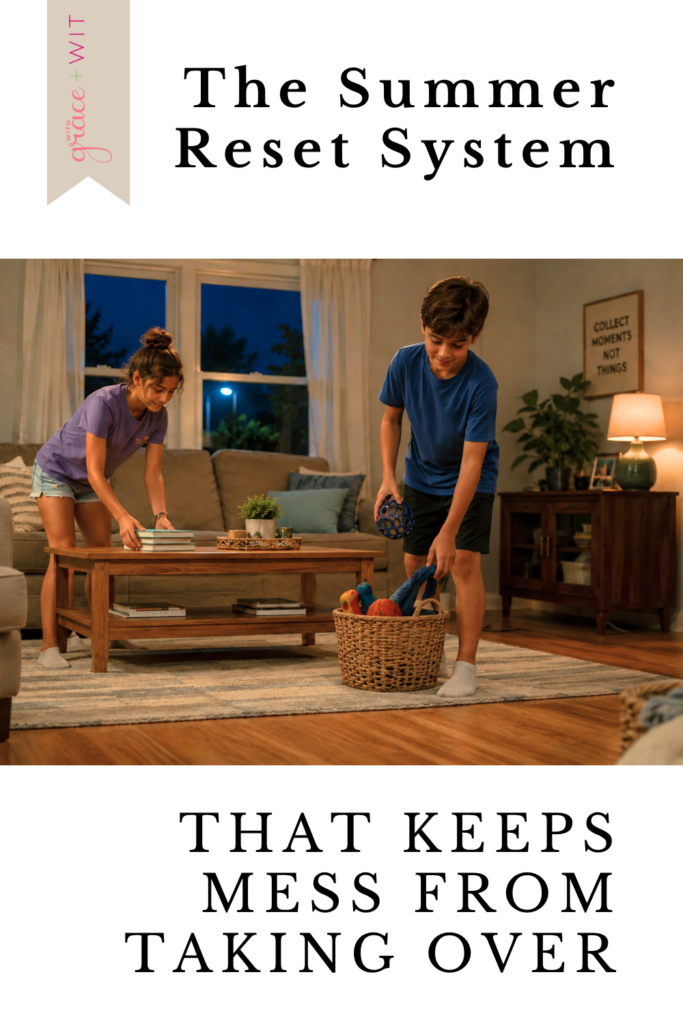
Their job is simple: clear the common areas.
- The Living/Family Room: All toys, books, and “projects” need to be returned to their homes.
- Late Night Snacks: Any dishes or wrappers from the evening wind-down go to the sink or the trash.
- The Outside Check: We have a firm rule—no bikes left in the grass and no sprinklers left running. If it’s an outdoor toy, it goes back to the garage or the bin.
For You:
Your closing duties should be the 10–15 minute tasks that provide the highest ROI for your morning sanity. For me, that’s clearing the kitchen counters, picking up all the stray pillows, and folding the blankets so the living room is fully reset. Consequently, my favorite morning chair is ready to go, too.
Handling the “But I’m Still Playing With This!” Argument
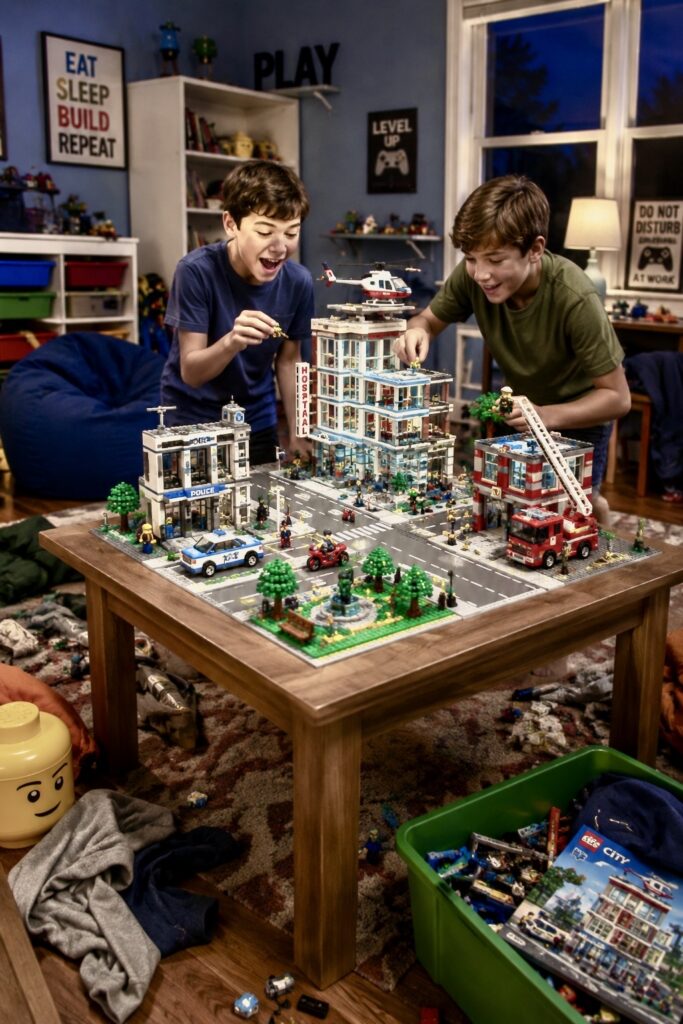
The biggest friction point in a summer reset is the “Masterpiece.” Your kids have spent four hours building a Lego city or a sprawling dollhouse village, and now it’s bedtime.
One of three things usually happens:
- You force them to clean it up, and you’re the villain.
- You realize 30 minutes isn’t enough to clean 10 hours of play, and everyone ends up crying.
- They beg to leave it out so they can play again tomorrow.
Here is how we handle this without losing our minds: The Rule of Common Areas.
We want to encourage deep, multi-day play. However, the common areas (the kitchen and the living room) have different rules than the bedrooms or the playroom. If a project is in the living room, it has to be reset every night because that is a shared space. If they want to keep a “Masterpiece” going for three days, it needs to happen in a designated “Project Zone” like their bedroom or a specific corner of the playroom.
By giving them a space where the mess can stay, you stop being the bad guy. You aren’t ending their fun; you’re just managing the geography of it.
The Power of the Expectations List
If you’ve been following along, you know I’m a big fan of using a to-do list to foster independence and summer skills. This is the secret sauce to avoiding the nagging.
Instead of hovering over them at 8:00 PM, the reset is simply the final item on their daily list. It includes their work (chores and learning) and their play. By making the “Common Area Reset” a standard expectation of their day, it stops being a personal attack on their fun and starts being just… what we do.
We don’t use a “Pinterest-worthy” chore chart with gold stars. It’s a simple list that balances expectations. They know that until the “outside toys” and “living room stuff” are handled, the day isn’t officially done.
Why We Do This (It’s Not for the Neighbors)
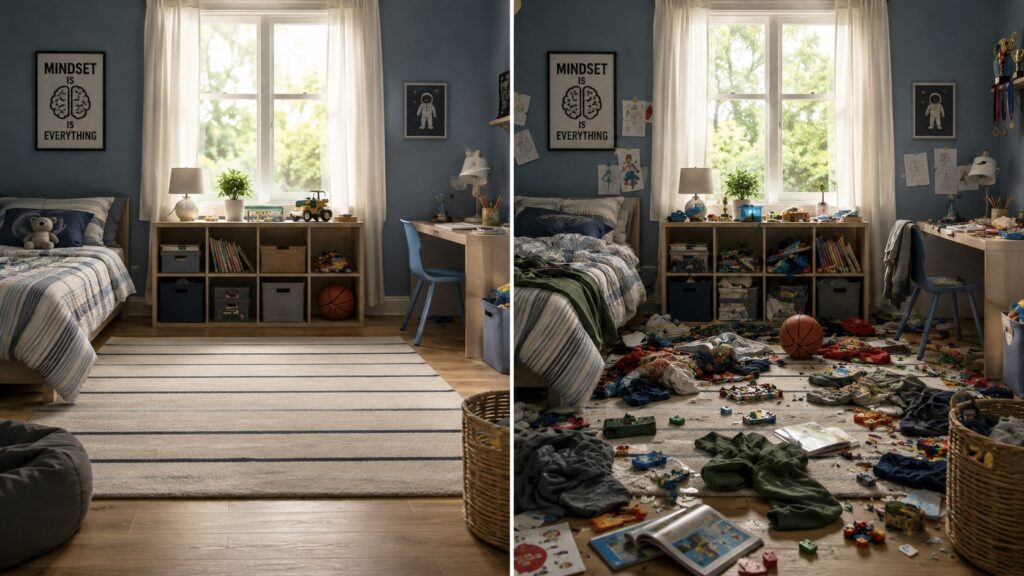
There is a segment of the internet that suggests we should “embrace the mess” because “they’re only young once.” And while I agree that a lived-in house is a sign of a happy summer, I also know that visual chaos creates mental chaos.
But we don’t do this just for our own peace of mind. We do this to teach our kids responsibility. It reminds them that in a family, we all do our part—Mom and Dad are not the servants.
Mental chaos isn’t something kids automatically understand, and frankly, they shouldn’t have to. As parents, it’s our job to teach them that living in constant visual chaos isn’t healthy, so we find a functional middle ground.
I don’t reset my house so it looks good for a photo. I don’t do it because I care if the neighbors see a bike in the lawn.
I do it to teach my kids, and I do it for the version of me that wakes up at 6:30 AM. I love the quiet peace in the morning before all the kids wake up. When I walk into a kitchen that doesn’t have sticky counters and sit down in a living room where the blankets are folded, I can actually breathe. I can drink my tea. I can think about the day ahead with a sense of “I’ve got this” instead of “I’m already behind.”
That 15-minute reset at night is a gift you give your family and your future self. It creates a genuine, peaceful space for everyone to exist in, rather than a fake, showcased version of a life you aren’t actually living.
Putting it into Practice This Week
If your summer has already descended into full-blown chaos, don’t try to deep-clean the whole house tomorrow. Just pick your Reset Point.
- Identify your “Morning Spot”: What is the one area you need tidy to feel human tomorrow morning? (For me, it’s the folded blankets and clear counters).
- Define the Kid Minimum: What are the two things they can do in 10 minutes to help the house breathe? (Dishes in the sink, bikes in the garage).
- Set the Boundary: Explain the difference between “Common Areas” and “Project Zones.”
Summer is meant for the long days and the “play all day and again tomorrow” energy. By implementing a small, sustainable reset system, you ensure that the mess stays a byproduct of the fun, rather than the thing that ruins it.