Halloween is usually my marker. Once the costumes are put away, I start thinking about winter. But the weather doesn’t always follow the calendar. Some years we have a beautiful Halloween, and some years it snows. When the cold comes early and the frost warnings start, the winter jobs get done early. This year it’s the 26th of October and yesterday was a 70 degree day, so I have a little more time.
I’m not complaining. I love fall: the cooler temperatures, the colors, the new (again) wardrobe, a routine to settle back into, and those last sunny days. My roses are still blooming, a few already forming rose hips, and my bulbs still need to go in the ground. That’s the trouble with fall. There’s so much to enjoy that it’s hard to know when to switch over to winter.
So here’s the list I work from, sorted by what has a weather deadline. Start with those jobs, then work through the rest as the weather allows.
Get Coats, Boots, and Gloves Ready Before the First Snow
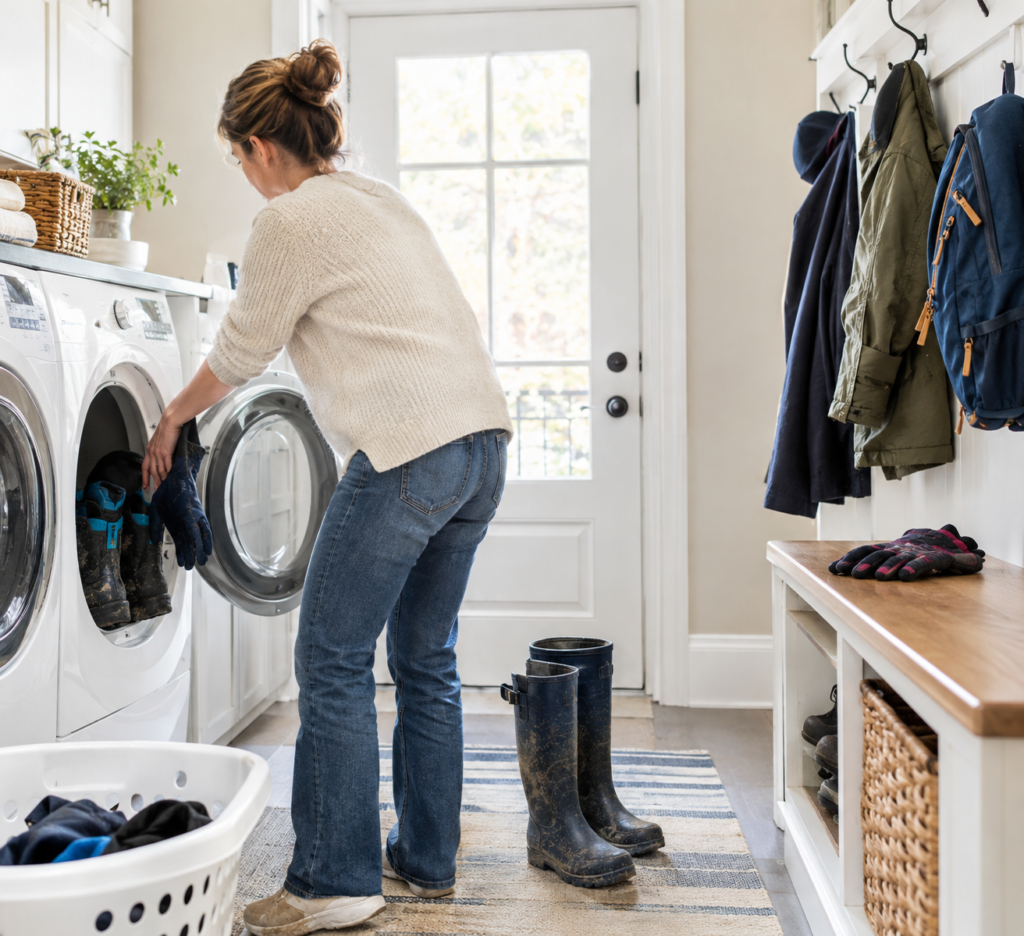
Check winter gear in October, not on a snowy school morning. Try on coats, boots and snow pants, replace whatever has been outgrown, and make sure everyone has gloves. Put away the summer shoes that won’t get much use for the next few months. Around here, boots become the everyday footwear, with the occasional pair of Crocs for coming home from swim practice.
The first snow is usually only a dusting, but it can be enough to turn the playground into a mess. A day of staying off the grass isn’t the end of the world for my kids, but it’s a day I’d rather avoid, and sending boots to school makes that not an issue.
You don’t need to reorganize your entire entryway. You do need to know where wet boots and gloves will go. Our mudroom is small and doubles as our laundry room, so wet gear usually goes straight into the dryer. It isn’t a perfect system. There are always a few days when gloves get left in a backpack and are still wet just before school. We work through it, and the routine settles down quickly.
Put Away and Protect Outdoor Equipment
Outdoor work has a deadline that indoor projects don’t: freezing weather. Some equipment needs to be winterized, and other things just need to be put away or covered before the snow and ice arrive.
Start with what you won’t use again until spring. Winterize the lawnmower, prepare the sprinkler system for freezing temperatures, and disconnect and drain the garden hoses. Check any outdoor plumbing or equipment that could be damaged by water freezing inside it. The sprinkler system is one of our annual jobs. We blow out the lines ourselves, but whether you do it yourself or hire someone, get it done before the first hard freeze.
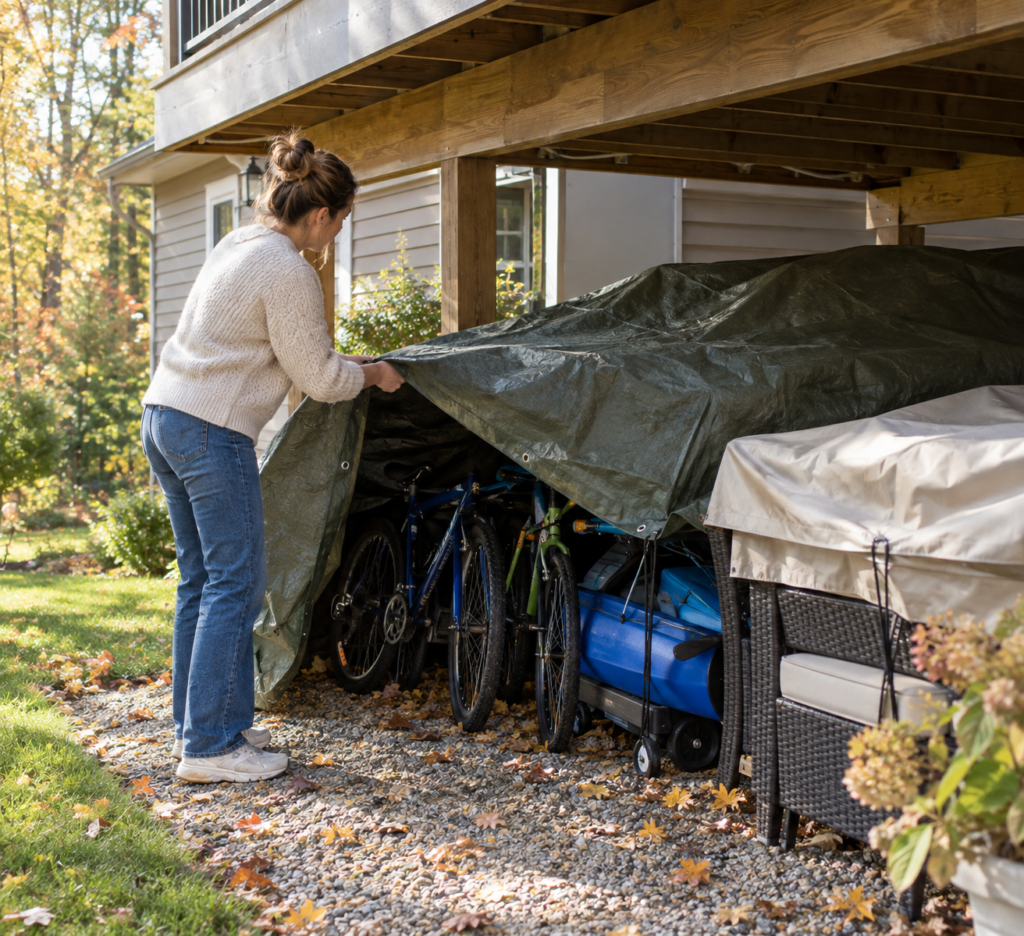
Next, outdoor furniture and summer gear. we’ve had times where garage and shed space was limited, so the bikes and other summer equipment went under a tarp beneath the deck. That kept everything protected and out of the way. The hard part was doing it on a beautiful October weekend when we wanted to be outside enjoying the last warm days. Now that our needs have changed, covering the outdoor furniture is the main job. Your list will depend on what you own and where you store it.
Then bring out the snowblower and make sure it starts. Don’t wait for the first heavy snowfall to find out it needs attention. Decide where it will live for the winter so you can get to it quickly.
Winterize the Garden and Landscape
If you garden, fall maintenance isn’t optional. It’s the same idea as covering the outdoor furniture: protect what needs protecting before the weather makes the job harder.
My beds are already prepped for winter. I also have a plan for my potted plants and water days scheduled throughout the winter while they’re dormant. What you need to do depends on what you grow and where you live, but it helps to decide now rather than in the first week of December.
Spring bulbs belong on this list, too. If you want tulips, daffodils or alliums, fall is when you plant them, before the ground freezes. I learned a lot about planting tulips over the last few years. When we ended up with a new flower bed, I wanted it to be joyful, so I bought a mix of a thousand tulip bulbs and planted them close together. It was wonderful, with different varieties blooming from early spring into the later part of the season. The next year, only about half came back. They had been planted too close together. I tried fewer bulbs the following year, but with only one variety I lost the long flowering season I’d loved.
Now I’m planning a layered planting with the bulbs I saved from last year, plus early and late varieties, daffodils and alliums. I’m hoping for a longer season of blooms that lasts for several years. Check the recommended planting window for your bulbs and your area before you start.
Prepare the House for Heating Season
Before the cold settles in, check the equipment you’ll rely on to keep your house warm.
The furnace filter. The usual advice is to check it monthly during heating season and replace a standard 1-inch filter every one to three months. Thicker filters often last six to twelve months, and pets or a dusty house mean changing it sooner. Follow the label on your filter, and put a replacement date on the calendar so you aren’t guessing.
Furnace service. The standard recommendation is a professional tune-up once a year, ideally before the busy part of the heating season, since HVAC companies fill up once the weather turns. Check what your furnace manufacturer recommends and decide on a schedule for your house.
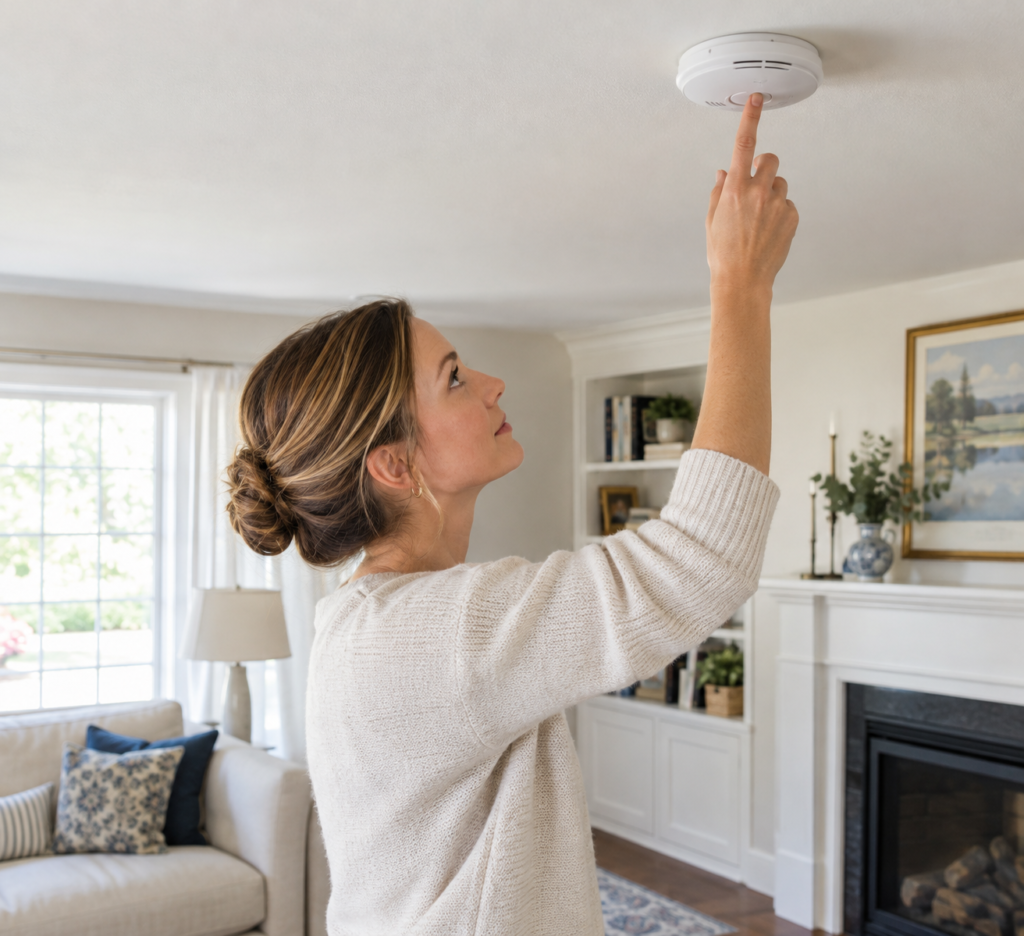
Smoke and carbon monoxide alarms. Test them monthly, and use the start of heating season as a reminder to check them. Carbon monoxide belongs on a fall list because your furnace, and any other fuel-burning appliance such as a gas water heater, stove or fireplace, is about to work harder. A blocked vent or a cracked part can let carbon monoxide into the house, which is why the alarm matters.
Ours are combined smoke and carbon monoxide alarms wired into the house, so there are no batteries to change. That also makes them harder to replace. We’ve now had the end-of-life chirp on two of them. The first time was a panic, because we had no idea what it meant. It was a good thing we still had the instructions. Look at the date printed on the back of your alarms, find out how long yours are meant to last, and keep the instructions somewhere you can find them.
These aren’t complicated jobs, but they’re easy to overlook while the weather is still nice. If you want a better way to keep track of recurring maintenance, my guide to A Simple Home Maintenance System: What to Notice, Schedule, Track, and Repair can help you decide what needs attention and when.
Check Supplies for Winter Weather
You don’t need to stock your house for months just because winter is coming. What makes sense depends on your household, your home and the resources you already have.
I’m speaking from experience here. At our old house, we lost power for three days in the middle of winter. We lived in the living room, by the fireplace. The whole neighborhood went out, and power was restored to most of it, but then our house, our neighbor’s and the one or two houses behind us went out again. The connection between the main line and our houses had broken. The four of us were not a high repair priority in the scheme of a widespread weather outage. We have a whole-house generator at this house, so our preparations look different now. If you don’t, it’s worth thinking through what three days without power would take in your home.
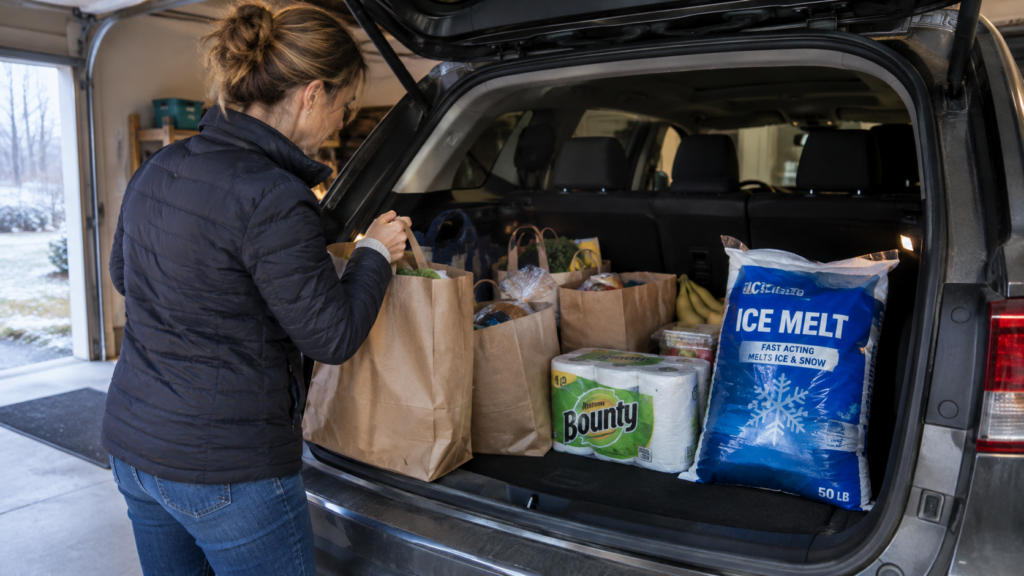
Think about what you use when winter weather arrives. Ice melt and snow-removal supplies are the obvious ones. I add ice melt to the grocery list in November, and we’re set. I also need a new shovel, because ours broke last year. Better to remember that now than in front of a driveway full of snow.
Food is a little different. Rather than keeping a large stockpile all winter, I check the pantry and refrigerator when a significant storm is forecast. What I do keep on hand is enough for two or three easy dinners in case of an emergency. It’s useful in winter, and it’s just as useful after a summer thunderstorm knocks out the power.
Your Before-Winter Checklist
You don’t have to do every outdoor chore, organize every room or stock up on everything you might possibly need. Start with the jobs that have a real weather deadline, then work through the rest before you need them.
Winter gear
☐ Check that everyone’s winter coat, boots and snow pants fit.
☐ Find gloves and other winter accessories.
☐ Put away summer shoes that won’t be needed.
☐ Decide where wet boots and gloves will dry.
Outdoor equipment and spaces
☐ Winterize the lawnmower.
☐ Prepare the sprinkler system for freezing weather.
☐ Disconnect and drain garden hoses.
☐ Protect outdoor plumbing and equipment that could freeze.
☐ Put away summer equipment and toys.
☐ Cover or store outdoor furniture.
☐ Check the snowblower and make sure it starts.
☐ Decide where the snowblower will be stored for winter.
Garden and landscape
☐ Finish fall prep for garden beds.
☐ Make a plan for potted plants, including winter watering.
☐ Plant spring-flowering bulbs before the ground freezes (if this applies).
Heating and home safety
☐ Check the furnace filter and replace it if needed.
☐ Make sure the heating system is working properly.
☐ Schedule a furnace tune-up if it’s due.
☐ Test smoke and carbon monoxide alarms.
☐ Check the replacement date on each alarm.
Winter supplies
☐ Check ice melt and snow-removal supplies, including the shovel.
☐ Make sure there are two or three easy emergency dinners on hand.
☐ Add anything your household would be sorry to run out of in a storm.
Copy-and-Paste Version
Paste this into your Notes or Reminders app and delete anything that doesn’t apply to your family.
FALL-TO-WINTER HOME CHECKLIST

WINTER GEAR

- Check that everyone's coat, boots and snow pants fit
- Find gloves and other winter accessories
- Put away summer shoes
- Decide where wet boots and gloves will dry

OUTDOOR EQUIPMENT AND SPACES

- Winterize the lawnmower
- Prepare the sprinkler system for freezing weather
- Disconnect and drain garden hoses
- Protect outdoor plumbing and equipment that could freeze
- Put away summer equipment and toys
- Cover or store outdoor furniture
- Check the snowblower and decide where it will be stored

GARDEN AND LANDSCAPE

- Finish fall prep for garden beds
- Make a plan for potted plants, including winter watering
- Plant spring-flowering bulbs, if applicable

HEATING AND HOME SAFETY

- Check the furnace filter
- Make sure the heating system is working properly
- Schedule a furnace tune-up, if it's due
- Test smoke and carbon monoxide alarms
- Check the replacement date on each alarm

WINTER SUPPLIES

- Check ice melt and snow-removal supplies, including the shovel
- Make sure there are two or three easy emergency dinners on hand
- Replace anything I'd be sorry to run out of in a storm
A Final Thought
You don’t have to finish everything in one weekend. Pick one job with a weather deadline, like draining the hoses or trying on the boots, and do that first. A little preparation now can keep you from solving a preventable problem in the middle of winter.
Which one are you starting with? I just finished my bulbs, so I’m starting with boot sizes.