Just when I think I’m in a rhythm, things are coming and going, we have what we need, and I am on top of things, something changes. It could be a new sport, extra doctor’s appointments, sick kids. The end result is the same, I have lost my rhythm. It’s then when we run out of paper towel, cobble together dinner from what’s in the bottom of the freezer or I have to take a trip to the grocery store every other day because I missed my “big” grocery run of the week. Getting supplies is easy in theory, it’s the budgeting, timing and everything else that makes it hard and a logistical nightmare on some weeks.

How I Define Groceries and Supplies
When I say groceries and supplies, I mean everything in the house that gets used up and has to be replaced. Food and snacks, paper products like toilet paper and paper towels, cleaning supplies, and personal care items like shampoo.
I think of managing it in four parts:
- Knowing what you’re low on
- Deciding what to buy
- Getting it home
- Staying within your budget
When one part slips, the whole system can start to falter. Here’s how I handle managing goods in my house, and where you might do it differently.
Know What You’re Low On
Inventory management is key to any good system. It’s a pain, but it’s also simple. You just need to know what you have and what you’re running out of. So why is it so hard?
Part of it is that things run out at different speeds. Perishable food like produce, dairy, and meat gets used up quickly and is bought on a short cycle. Pantry items, paper products, cleaning supplies, and personal care items last longer, so they tend to sneak up on you.
The other part is how you find out. Maybe you notice when you reach for the last one. Maybe a kid tells you, or your spouse mentions it. The information often comes in when you’re not fully paying attention, usually in the middle of something else. So you need a way of catching it that fits your temperament.
What’s your way of knowing what you need?
Where You Keep Things Matters: At a Glance Inventory Checks
Our paper products live in the laundry room, where I can see them. They’re neatly organized, so a single glance tells me if we’re low on paper towels, toilet paper, or tissues. Cleaning products are in a cabinet in the same room, so I check those when I’m making a list. Wherever yours live, keep the backups somewhere you’ll see them.
My spices are the same way: if the label is upside down, we are out. I can quickly see what we need when I’m planning a meal.
How You Note Inventory Matters: Mastering a List
Then there’s the list.
A running list has never worked for me. Being on the list doesn’t mean the item gets bought on the next trip. Digital and shared lists are hard for me too. I use them for quick trips, but switching between a list and my grocery store’s app is cumbersome. The store’s app has a list feature, but I don’t buy everything from one store, so it doesn’t solve much. If you’ve mastered the list, kudos to you. I haven’t.
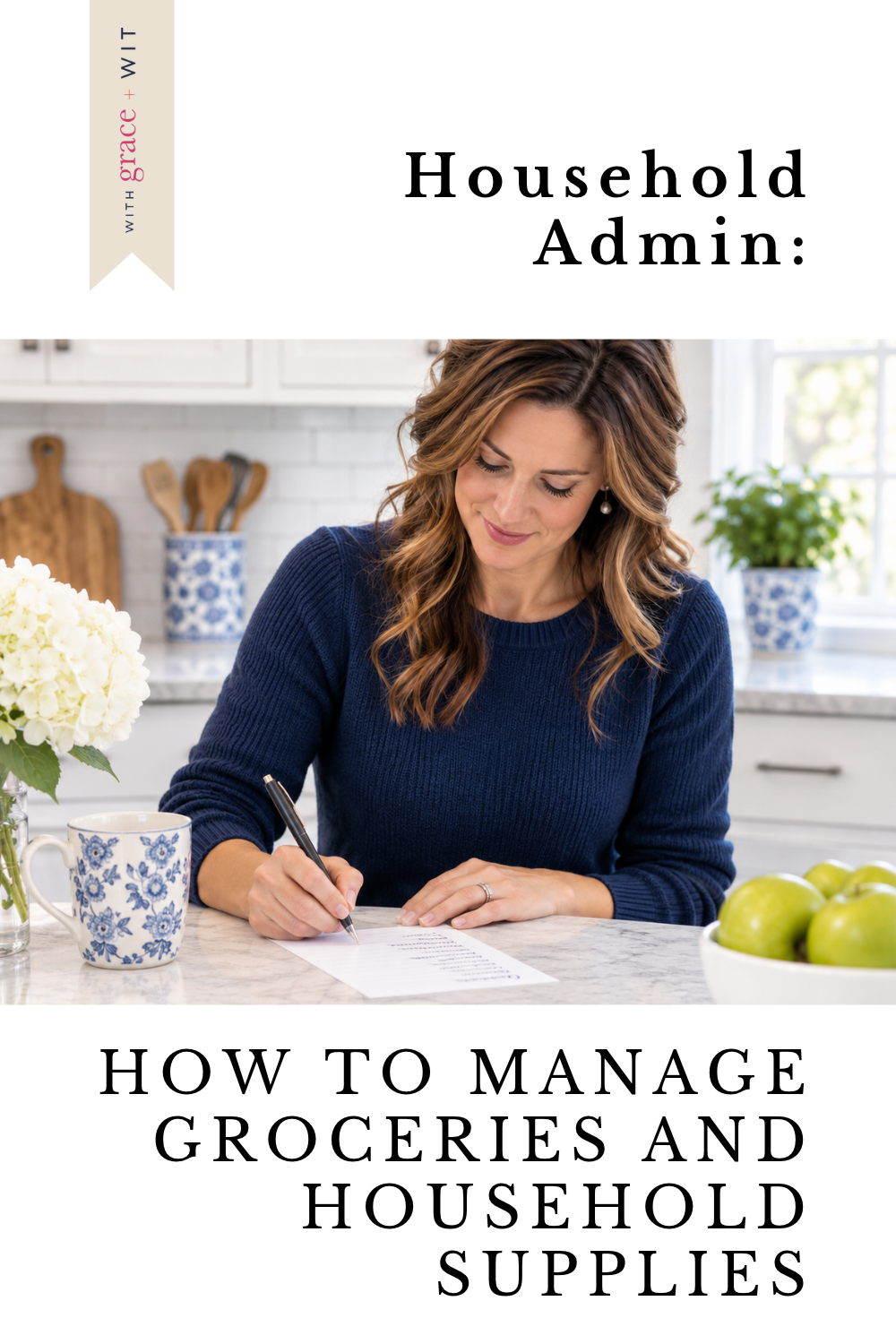
What works for me is writing a fresh list each time I shop. I check what we’re low on based on the meals for the week, add anything someone has mentioned, and ask my husband if he needs anything so we stay in sync. It isn’t foolproof, but it works for us.
Decide What to Buy
Knowing what you’re low on and deciding what to buy don’t always happen in order. They overlap. Most of what I buy falls into three categories.
Regular food items. This one is a question of how much we use. How many eggs do we eat in a week? How many gallons of milk? Do we have enough snacks for the kids? Once you pay attention for a few weeks, you start to know your household’s numbers.
Meals. This is most of the planning. What I make depends partly on what we have at home, partly on what’s on sale that week, and partly on what our evenings look like. I plan the meals, and my husband will say a meal sounds good or ask what we haven’t had in a while. With dietary concerns in our house, winging it or ordering takeout isn’t an easy fallback, so planning ahead takes a lot of pressure off.
Paper and toiletry products. These last longer, so they follow a different rhythm. Buying in bulk usually costs less per item, but there’s an upfront cost and you need somewhere to store it. It works best for things you use steadily that won’t spoil. My local grocery store runs a cleaning products sale every couple of months, with rotating brands, and if I spend over a certain amount, I save at least 30%. I plan around what I’m low on so it adds up to that amount.
Sales are where a little planning pays off. I stock up on meat when it’s on sale. Lately I’ve also been taking the weekly circular and asking AI to come up with three to five meals based on what’s on sale. It has worked well. It helps with the budget and our dietary needs, and it gets us trying new things.
A sale only saves money on things you were going to buy anyway, so that’s the test I use before I stock up.
Getting It Home
Once you know what you need, it still has to get to your house. A good manager doesn’t have to do every job herself, and groceries are a good example. I use a few different ways, depending on the week.
Some weeks I do all of it myself, and I’m in the store for about an hour and a half. Some weeks I schedule a pick-up, so I order ahead and grab it at a set time. Other weeks I have it delivered, and it shows up at the door. And when I have something going on, my husband does the pick-up on his way home from work.
Some things I don’t want to think about at all, like snacks, so they come on a recurring order, like Amazon’s Subscribe and Save. That’s one less thing to remember.
None of these is the right way. The one that fits is the one that works for the week you’re having. There are some logistics behind each of them. Someone has to place the order or have the list, someone has to be free at pick-up time, and everything has to get put away when it arrives. If you share the job, make sure the list gets to whoever is shopping. And if you’re wondering how to fit the trips into your week, the family calendar post can help.
Stay Within Budget
Here’s the hard part: staying on budget. There are so many ways to budget, and look at pricing the inventory and food in our houses. I find groceries are one of those places where small purchases add up quickly without a plan. I was not at my normal grocery store and they were selling a gallon of apple cider for $9.99. Boy, did I have sticker shock. Good thing I wasn’t planning on cider that day.
The good thing about technology is that there are so many ways to see what you are spending in real time. All without the mental math and running tally in your head.
When I’m in the store, I scan as I shop, so I know my total as I go. On weeks when money is really tight, I shop online, where I can see the total as I build the order.
Sales and bulk buying fit here too. They save money over time, but they make some weeks cost more than others. If you buy in bulk, it helps to plan for it. Look at what’s coming up, like a cleaning products sale or a meat sale, and set aside money ahead of time so it doesn’t land on an ordinary week. If you haven’t set a grocery budget yet, the money and paperwork post is a good place to start.
Where It Breaks Down
This system works until I get busy. When something comes up and I miss my regular visit to the store, the list gets cobbled together for the week. I buy what I remember instead of what we need, and then there’s the extra trip, or the thing we ran out of.
That’s the part I want you to take away from this: this is a job, and it takes time every week. Nobody notices when it’s done, but the household feels it when it isn’t.
It helps to decide ahead what happens on the busy weeks. That might be a shorter list, a grocery day you protect, or someone else taking a turn.
Try This Week
- If you already have a system: Pick one of the four areas that gives you the most trouble and change one thing about it. Just one.
- If you don’t have a system yet: Start with knowing what you’re low on. Choose one spot where you can see your backups, and write your next list from what you find.
Further Reading

Household Admin: How to Manage Groceries and Household Supplies
Read more: Household Admin: How to Manage Groceries and Household SuppliesHousehold Admin: How to Manage Chores Without a Chore Chart
Read more: Household Admin: How to Manage Chores Without a Chore Chart