If you’ve ever opened a drawer looking for one paper—and ended up staring at a ten year’s worth of decisions you never made—you’re not alone.
That’s exactly where I am right now.
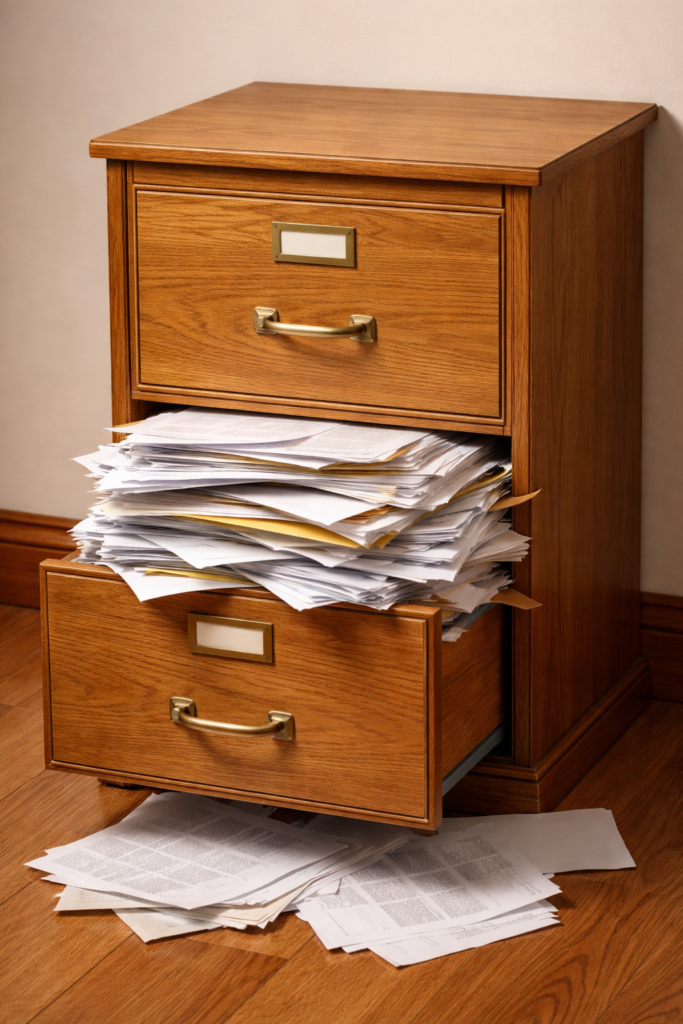
I used to think I had a paper system. I had drawers. I had folders. I had a general idea of where things went. And for a season of life, it worked.
But life didn’t stay in that season.
Four kids later, school papers, insurance forms, keepsakes, tax documents, random receipts, and all the “I’ll deal with this later” papers have quietly taken over. What used to be a system is now… storage for delayed decisions.
And if I’m being honest, it’s one of the biggest sources of low-grade stress in my home. So if I were starting over, this is the one system I would rebuild first:
A home paper organization system that actually handles real life.
Not just this week’s mail. Not just perfectly labeled folders. But something that works when life is full, busy, and a little messy.
Before we get into what I would do, let’s talk about why so many paper systems don’t last.
Why Most Paper Systems Eventually Break Down
I’ve tried a few different approaches over the years, and here’s what I’ve noticed:
| System | Why It Sounds Good | Why It Didn’t Work (for me) |
|---|---|---|
| Filing Cabinet | Everything has a labeled place | You set it up beautifully—then life happens. New categories pile up, folders get stuffed, and suddenly you need a label maker just to keep up. |
| Binder System | Everything in one place | Became bulky and unrealistic for daily use. Papers never actually made it in, or lived just inside the cover never actually filed. |
| Go Paperless | Less paper = less clutter | Not everything can be digital. And honestly, I never kept up with scanning. |
| Minimalist Approach | Keep almost nothing | Felt stressful. I didn’t want to second-guess what I might need later. |
None of these are bad systems. They just didn’t work for the volume and reality of our home.
And here’s something worth naming: most of us are running a hybrid system whether we planned to or not. Electric bills come by email. Water bills still show up in the mailbox. School forms are sometimes digital, sometimes paper, sometimes both in the same week. Any system that doesn’t account for that reality is already working against you before you even start.
What I actually needed wasn’t a better storage method.
I needed a better process.
The Shift That Changes Everything
Most paper systems focus on where things go. But that’s not actually the hard part.
The hard part is knowing when you’ll need something again.
A permission slip and a medical record are both “important”—but in completely different ways. One needs action by Friday. One needs to exist somewhere findable in three years. Treating them the same is exactly why systems break down.
So instead of asking: “Where should I file this?”
The better question is: “When am I going to need this—and what happens if I can’t find it?”
That shift changes how you build the whole system. Because the paper you decide to keep needs to actually be usable when the moment comes.
The 3-Part Paper Process
This is the system I would build first if I were starting over. It’s simple, flexible, and designed to work even when you’re not perfectly on top of everything.
Part 1: Incoming (The Drop Zone)
This is the only place paper lands when it enters your home.
Mail. School papers. Birthday party invitations. Forms. Receipts. All of it goes here first.
No sorting. No decisions. Just one consistent landing spot.
In practice, mine is actually two spots — one for school stuff, one for everything else. Some days I have the bandwidth to sort through a permission slip but not the mental energy for tax paperwork, and that’s okay. The point isn’t one literal pile, it’s one contained inbox so paper stops living on every flat surface in your house.
One thing I do before anything hits the drop zone: junk mail goes straight to the trash. Ninety percent of the time it’s an easy call. And even on the days I’m not sure, it can wait — but getting rid of the obvious trash first cuts the chaos in half and honestly just feels good.
Part 2: Sort (Where Paper Gets Assigned a Future)
This is where the drop zone gets processed. Not filed — just sorted. You’re not organizing anything yet, you’re just answering one question for each piece of paper:
When am I going to need this — and what happens if I can’t find it?
Every piece lands in one of four places:
- Action — Something needs to happen soon. A permission slip to sign. A bill to pay. An appointment to schedule. Set these aside — they’re up next.
- Archive — You don’t need to do anything with it, but you’ll need to find it someday. Medical records. Tax documents. Insurance info. These go in your long-term storage: broad categories, year-based or person-based folders, nothing complicated. You just need to be able to find it when it matters.
- Memory — It’s not functional, it’s meaningful. Report cards, programs, artwork, the little pieces of your kids’ lives worth keeping. These go in their own dedicated space, separate from important documents. A drawer, a binder, a box — just give them a home that isn’t mixed in with everything else. A container with limits is actually a gift to yourself, because it forces you to keep what matters most.
- Trash — Everything else. Be ruthless here. If it doesn’t have a clear future, it doesn’t need a home.
And if you sit down to sort and just don’t have the energy to make decisions today? That’s what the drop zone is for. It will wait. Sorting, two or three times a week is plenty — you don’t have to do this every single day.
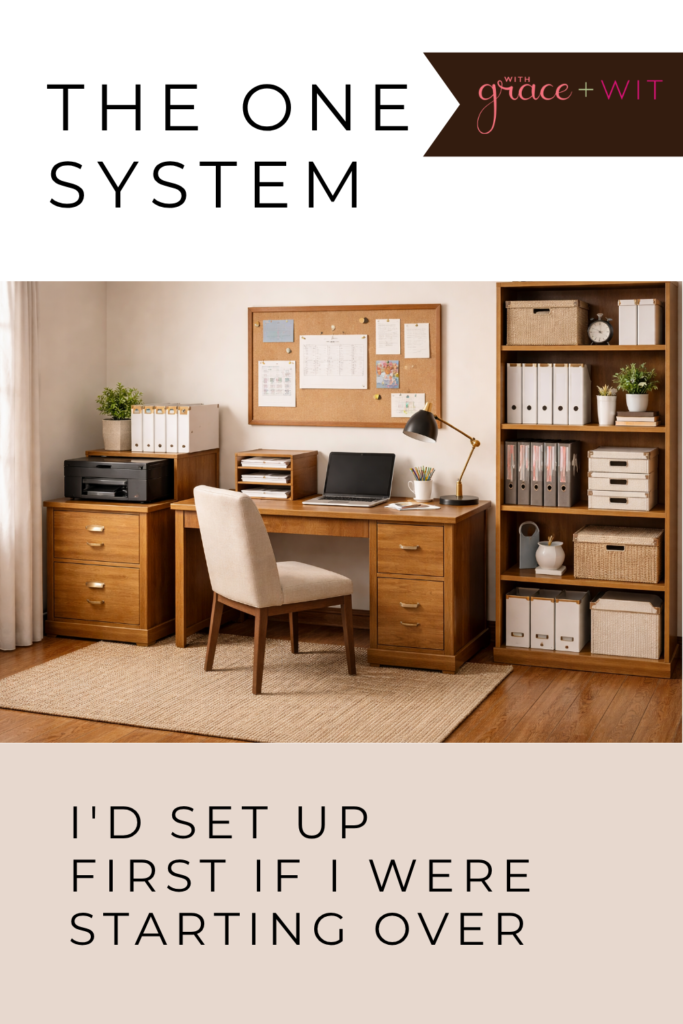
Part 3: Act (Put It Where It Belongs and Do What It Needs)
Archive and Memory papers have a home — put them there. File the insurance document. Slip the artwork into the memory drawer. This part takes maybe two minutes, but it’s the step that makes everything real. Don’t let sorted papers sit in a new pile just because they’ve been categorized. Sorted isn’t done.
And then there are the Action papers — these need one more step beyond finding them a home. They need you to actually do something.
This is its own part because it’s easy to sort a permission slip into an “Action” pile and then never look at it again. Sound familiar?
Keep this pile small and visible. Not tucked in a folder, not buried in a drawer. Somewhere you’ll actually see it.
Then set a simple rhythm — two or three times a week — to work through it. Pay the bill. Sign the form. Make the call. Once it’s handled, it either gets filed in Archive, kept in Memory, or tossed.
That’s the whole system. Paper comes in, gets sorted, gets put away, and gets handled. Nothing sits in a pile waiting to become next month’s problem. You are handling it in 5-minute increments throughout the week. Easy!
How the Process Actually Works
Here’s what makes this different from a storage system:
Paper moves through three steps.
Incoming → Sort → Act
Sort decides where everything goes. Act means actually putting things where they belong and working through what still needs your attention.
No complicated steps. No pressure to decide everything at once. Just a clear next move for every piece of paper that comes through your door.
The Biggest Mistake I Wasn’t Going to Make Again
In the past, I tried to fix everything at once. Pull out all the papers. Sort everything. Build the perfect system. And every time, I burned out halfway through.
So I did it differently this time. I set up the process first — so new paper had somewhere to go. Then I worked through the backlog slowly, in small pockets of time.
Because the goal wasn’t to organize a decade of paper in a weekend. The goal was to stop the cycle from continuing.
Why This Works When Life Gets Busy
What I love about this approach is that it doesn’t require perfect consistency.
It works when:
- you miss a week
- papers pile up temporarily
- life gets busy (because it will)
It doesn’t rely on a strict routine. It creates a structure that supports you even when you’re behind.
And honestly? That’s the only kind of system that actually lasts.
If You’re Feeling Overwhelmed Right Now
Start here:
Don’t pull everything out. Don’t try to solve it all today.
Just create a place for incoming paper.
That’s it.
Because once paper stops spreading, everything else gets easier.
A Simple Reset You Can Start With
If you’re in the same place I am—needing a reset, not a perfect solution—I created something to help.
It’s my Repetition Reset, and it walks you through how to build small systems that actually support your everyday life. Not just the ideal days. The real ones.
Because this isn’t just about paper.
It’s about creating rhythms that reduce the constant mental load of running a home.
Paper Touches Everything — Start Here
Laundry and cleaning have a way of getting done, perfect routine or not. But paper? Paper touches everything — schedules, finances, school, memories, daily life. And most of us already know that when it’s not handled, it quietly adds stress in the background.
When paper has a process, everything feels just a little bit lighter.
Start with one simple step: create a place for the paper that comes in tomorrow. Build from there.
And if you want a little guidance, the Repetition Reset is a good place to start.