
I see you. I know that heavy feeling of having a lack of time, a lack of money, and a lack of energy. It’s total burnout. Whether your burnout is coming from a season of life or just a Tuesday that went sideways, I’ve been there.
I often think about the last time we moved. It was so overwhelming that we actually had to leave a few things behind because they were frozen to the ground. In the middle of all that overload, figuring out how to thaw garden equipment wasn’t high on the priority list—I just didn’t have the bandwidth. I can still see my favorite tomato planter sitting there, trapped in the ice.
The thing about moving, though, is that there is a finish line. You pack the last box, you lock the door, and you’re done. But what if that same heavy, drowning feeling is your everyday life? What if there is no finish line in sight? If that’s where you are right now, I want you to take a deep breath.
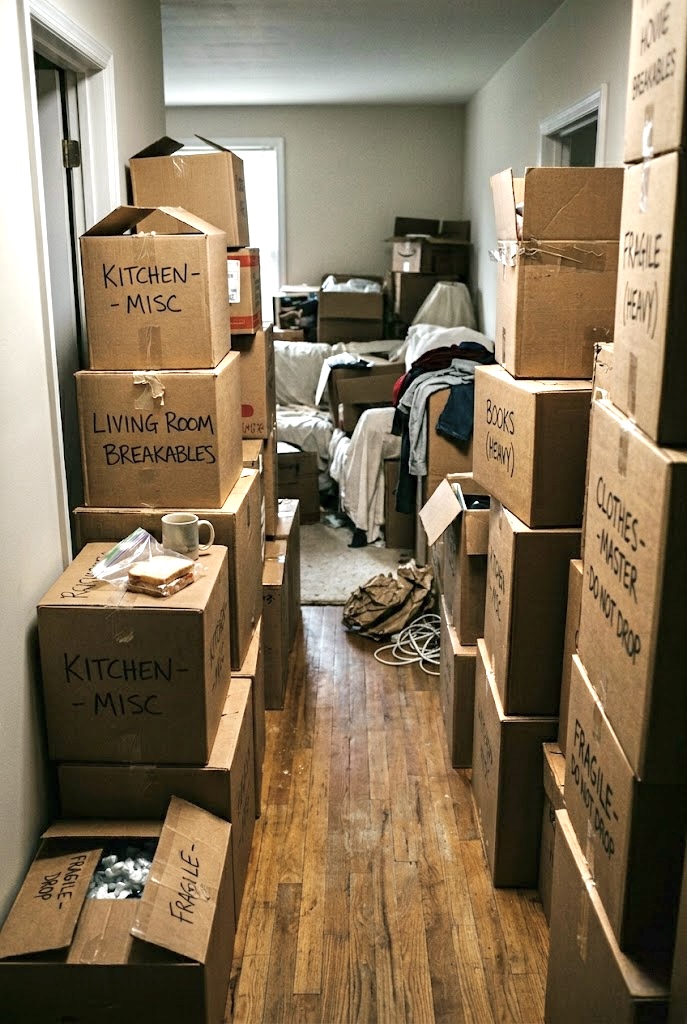
When everything feels chaotic, you don’t need a weekend-long deep-cleaning spree or a new, rigid organization system. You need a lifeline. Here is exactly where to start when your home feels out of control.
Step 1: Identify Your “Out of Control”
Before we can fix the chaos, we have to look it in the eye and name it. Overwhelm makes us feel like everything is broken all at once. But usually, if we pause, we can pinpoint the actual leaks in the boat.
Chaos often takes these forms:
- Physical Clutter: You’re drowning in “stuff,” and a lack of organization is making every task take twice as long.
- Mental Load: You’re carrying the invisible weight of everyone’s schedules, appointments, and needs in a busy, blended family.
- Environmental Fatigue: It feels like every appliance or pipe has broken in the last six months, and you’re just waiting for the next expensive repair to push you over the edge.
- The Parenting vs. Self-Care Tilt: You are pouring so much into everyone else that there is zero left for you. Your own needs have become a “someday” project while you manage everyone else’s “right now” emergencies.
When we leave chaos as a vague cloud of “everything is terrible,” we can’t solve it. But once you identify the source, you take away some of its power. You turn a scary monster into a manageable checklist that you can actually address.
💡 Action Step: Grab some paper and write down the top two or three things making you feel out of control today. Don’t worry about fixing them yet. Just get them out of your head and onto paper.
Step 2: Focus Only on What You Can Control
Once you have your list, it is time to draw a hard line between what you can change and what you just have to ride out. You cannot control if the furnace decides to make a weird clunking noise tomorrow. You cannot control if a Michigan March decides to dump six inches of snow on a Monday, giving everyone an unexpected snow day.

But you can control how you respond to the daily friction points in your house. Think about the three areas we just identified:
- Time: You can’t magically find five extra hours, but you can control tackling just one extra load of laundry today to keep the pile from becoming a mountain.
- Money: Finding a pot of gold to pay for a kitchen remodel isn’t going to happen, but you can control making coffee at home today. If you do that even once or twice a week, you’re already saving $20–$40 a month.
- Energy: You can’t stop the kids from being kids, but you can control one small 10-minute reset before bed so you don’t wake up to visual noise.
Sometimes, starting is the hardest part of the battle. When the house feels like it’s winning, I find that a “micro-project” helps me reset. I’m talking about something small: painting your nails, ten minutes of a knitting project, or even making a simple loaf of bread.
Why? Because the feeling of finishing something—anything—gives you the self-confidence and momentum needed to upset that feeling of overwhelm. It proves to your brain that you are still in the driver’s seat.
💡 Action Step: Look at your list from Step 1. What is one tiny thing—one cleared counter, one cup of coffee, or one small 10-minute win—that you can do right now to regain a sense of control?
Step 3: Find Your Recurring Friction Points
After a day or two of just focusing on what you can control, you’ll start to notice a pattern. If you feel like you are fighting the same battles every single day, it’s because you are. We often treat household problems like one-time emergencies when they are actually recurring events.
If you are constantly scrambling at 5:00 PM for dinner, or hunting for shoes every morning, you don’t have a personal failure. You have a system failure. In my home, I learned that Sustainable home systems are designed for ordinary days not ideal ones. We need systems that catch us on a Tuesday afternoon when everyone is tired and the dog is tracking mud into the house.
🎉 Free Resource: If you’re thinking, “I don’t even know what my friction points are,” download my Repetition Reset Checklist. It helps you pinpoint the exact recurring pain points draining your energy so we can build simple rhythms to fix them.
Step 4: Build Rhythms, Not Rigid Routines
Once you’ve identified those patterns, the temptation is to over-correct with a massive, rigid chore chart. But the moment a kid gets sick or a meeting runs late, that rigid schedule shatters.
Instead, focus on gentle household rhythms. What three things can you do in the morning to set your day up for success? What three things can you do in the evening to help Tomorrow-You breathe easier? In our house, we focus on the 3 household systems that reduce 80% of daily stress. It’s about making sure the dishes are managed and the “hot-spots” are contained.
To keep myself on track with these rhythms, I used to buy generic sticker books, but I’d always run out of the specific ones I actually needed for home management. I wanted a way to see my progress without the mental load of rewriting a list every day. That’s why I ended up creating my own solution.
🎉 Free Resource: Check out my Habit Tracker Printable Chore Stickers. I designed these specifically for moms who manage their homes through a planner or a visual tracker. You can print them at home and use them to anchor your daily and weekly rhythms so you can stop “remembering” and start just doing.

A Final Note: Be Kind to Yourself
Your home is a living, breathing space, not a museum. It is okay if there are dishes in the sink tonight. It is okay if the laundry pile in the basement is taller than your teenagers.
When you feel like you’re drowning, do not look at the whole mountain. Just find one flat surface—the kitchen table, your nightstand, or the coffee table—and clear it off. Give your eyes a place to rest. Light a candle.
You do not have to fix your entire home today. You just have to find a little bit of breathing room so you can start building simple, sustainable rhythms for tomorrow. You’ve got this.
What is the one area of your house that feels the most out of control today? Leave a comment and let’s brainstorm a simple rhythm together to fix it!