
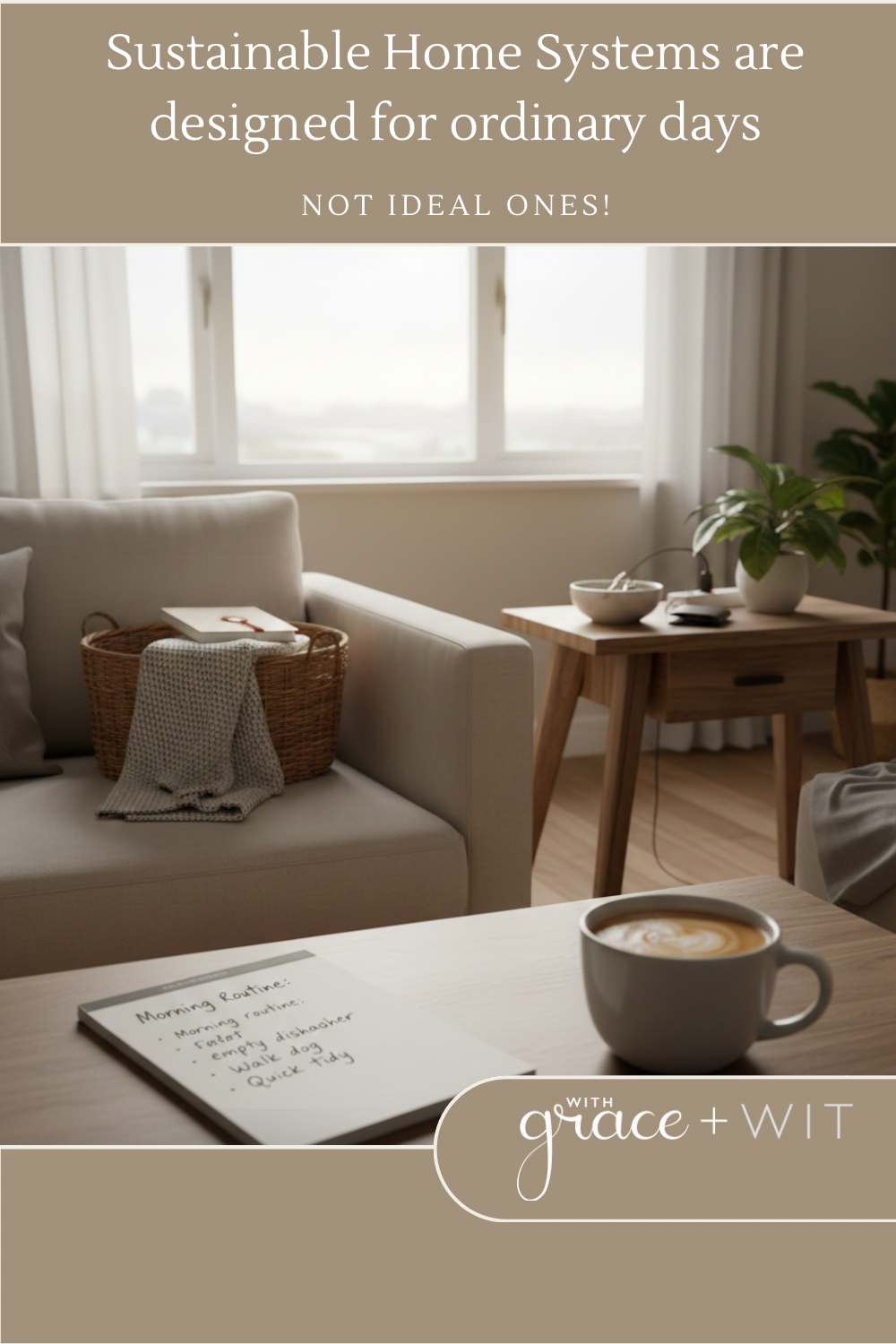
Many home systems fail for a simple reason: they are built for the wrong conditions. They assume uninterrupted time, steady energy, and cooperative schedules. They work beautifully on your best days—and unravel the moment life becomes ordinary again.
A thoughtful home is not designed for its highlight reel. It is designed for the “in-between” moments.
Ordinary days are the true test of any sustainable home system.
Most days are not dramatic; they are layered. A late start, an unexpected errand, or a half-finished task that carries into tomorrow. Systems that require everything to go according to plan will always feel fragile. Realistic systems assume interruption and continue anyway.
This is not pessimism; it is realism. And realism is the secret to a home that stays functional.
The Purpose of Structure is to Shorten Recovery Time
When a day goes off course, the question is not how to prevent disruption, but how quickly the home can recover. A thoughtful home does not aim for constant, rigid order. It aims for a quick return to order.
- Clear landing places: (e.g., a dedicated basket for mail, not just “the counter”).
- Default routines: Small habits that happen on autopilot.
- Simple resets: Tasks that take five minutes, not five hours.
These are not grand solutions; they are practical ways to ensure your home supports you rather than demanding your service.
Systems Should Absorb Inconsistency Without Guilt
A system that “fails” loudly—by creating a visible mess, a massive backlog, or a sense of failure—is not suited to everyday life.
Graceful systems are quiet. They accept inconsistency as part of the design. A missed day of dishes does not require a weekend of penance. An imperfect week does not demand a total “lifestyle overhaul.” The system resumes because it was never dependent on perfection to begin with.
Prioritize Flow Over Finish
Completion is satisfying, but it is not always possible. Many homes stall because we wait for tasks to be completely finished instead of allowing them to be contained.
A thoughtful home asks:
- Is this moving forward?
- Is this contained enough to let me rest?
- Is the next step clear for tomorrow?
Progress does not always require closure; it just requires a direction.
Simplify by Removing the Friction
When a routine starts to feel like a chore or an exhausting burden, it is often carrying one step too many. It might be one extra category to sort, one additional decision to make, or an expectation that doesn’t reflect your actual energy levels.
Removing a step is almost always more effective than trying to “try harder.” Sustainable home systems are edited, not expanded.
Reliable Systems Support You on Low-Energy Days
Energy fluctuates. Your home shouldn’t require you to be in a “productive mood” just to function. The most supportive systems are those you can trust when you’re tired, sick, or overwhelmed.
Trust builds when the system shows up for you regardless of how the day feels. A home that runs well does not demand your constant attention; it fades into the background.
When the home supports the day quietly—without instruction, negotiation, or repair—it is doing its work. This is the kind of order that lasts. Not impressive. Not rigid. Simply reliable.
Thoughtful systems are a form of kindness to your future self.
A practical next step:
Identify one routine that currently feels like a burdensome chore. Remove one step. Lower one expectation. Adjust it until it functions on your most ordinary, tired day.
Further Reading:
Want More from With Grace and Wit? Join our email list.