You cleaned the kitchen. The laundry is mostly caught up. The floors aren’t terrible. And yet, when you walk through the house, you find yourself thinking, This place needs some attention.
Maybe it’s the cabinet handle that’s been loose for months, the pile that has sat on the sideboard for two weeks, or the wall where the paint has chipped. Maybe the towels are fraying, the living room furniture doesn’t work the way it used to, or there’s a project you’ve been meaning to finish for months.

None of these is a big deal on its own. Your house isn’t falling apart, and you haven’t stopped taking care of it. But small things add up, and together they can leave a home feeling less comfortable and less cared for than you’d like.
Cleaning and maintenance only cover part of keeping up a home. The rest is noticing what has worn out, what has faded into the background, and which spaces no longer fit the way you live.
The good news is that you don’t have to fix everything at once. You don’t even have to fix everything eventually. Start by noticing what needs attention, decide what matters most, and figure out what you’re willing to do about it.
1. Fix the Little Things You’ve Been Meaning to Fix
Every house has small repairs and unfinished tasks that hang around indefinitely. A loose handle, a squeaky door, a picture that needs rehanging. None of them is urgent enough to demand attention, so you notice it, make a mental note, and move on.
The trouble is that you see it again tomorrow. And the next day. Each time, some part of you remembers that you meant to take care of it, even if the thought lasts only a second. Over time, the house starts to feel like a collection of unfinished business. The tasks are small, but together they add to the sense that something needs attention.
A few years ago I built a floating entertainment center because we have very little built-in storage. It hides the cables and holds lightbulbs, batteries, and the small tools I use around the house: a measuring tape, pliers, screwdrivers, Command hooks. The flip-down doors work well, but I always meant to add magnetic closures to keep them shut. I never did, so now the doors hang open a little, one side noticeably more than the other.
Nothing is broken, and the cabinet does its job. But I notice those doors more often than I’d like to admit. And, I keep telling myself, I’ll get to it.
You probably have your own version of this. A loose curtain rod, a missing piece of hardware, an appliance that works but takes a little extra effort every time you use it.
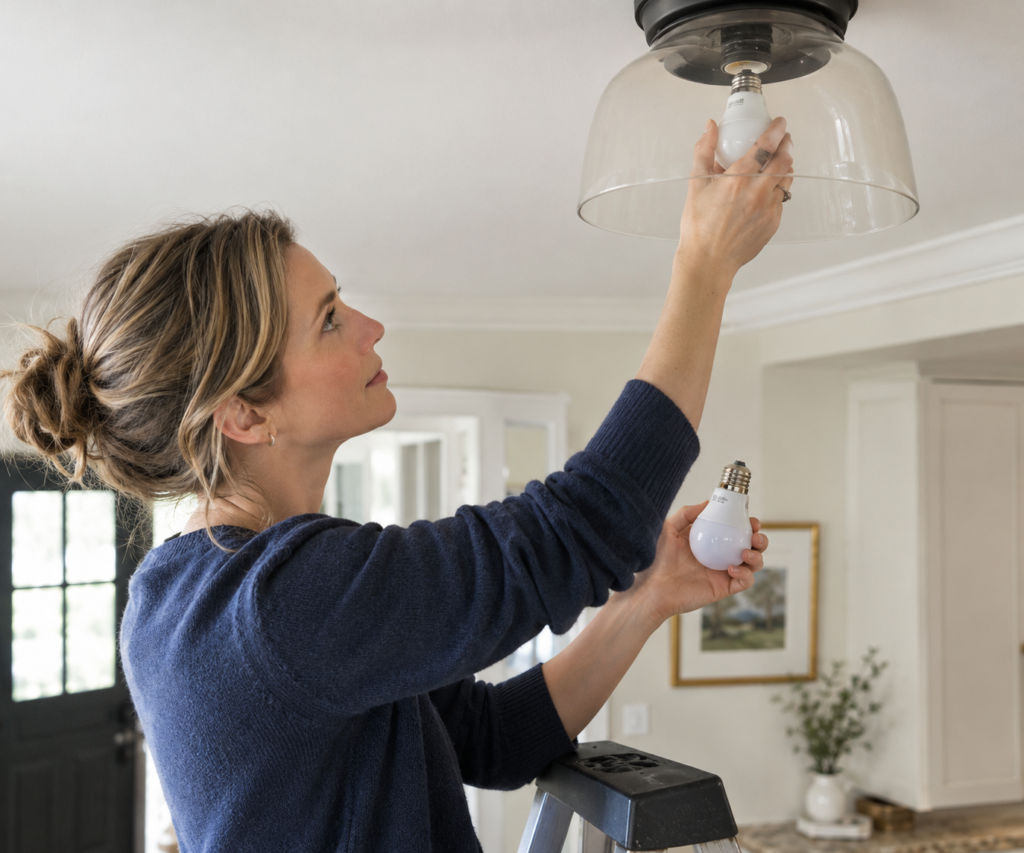
The first step is to stop relying on memory to keep track of these tasks. Keep a simple list of what needs attention around the house. It doesn’t need to be a detailed spreadsheet or a new household project. One note on your phone or a page in a notebook is enough.
When you notice something, write it down. You can decide later whether to fix it yourself, schedule time for it, buy what you need, or leave it alone for now.
Some repairs may also belong on a larger home maintenance list, especially if they need to be inspected, scheduled, or tracked over time (more on that at the end). But not every little thing needs a formal plan. Sometimes you just need to remember to finish what you started.
2. Notice When Temporary Things Become Permanent
Sometimes the problem isn’t a repair at all. Things have quietly settled into places where they don’t belong.
A basket in the hallway that was supposed to go upstairs. Mail piling up on the sideboard. Shoes that have taken up residence by the stairs, returns waiting by the door for the next trip to the store, a project still on the dining table long after you meant to finish it.
This isn’t clutter in the traditional sense. You probably know what everything is and where it goes. The temporary arrangement has just become the permanent one.
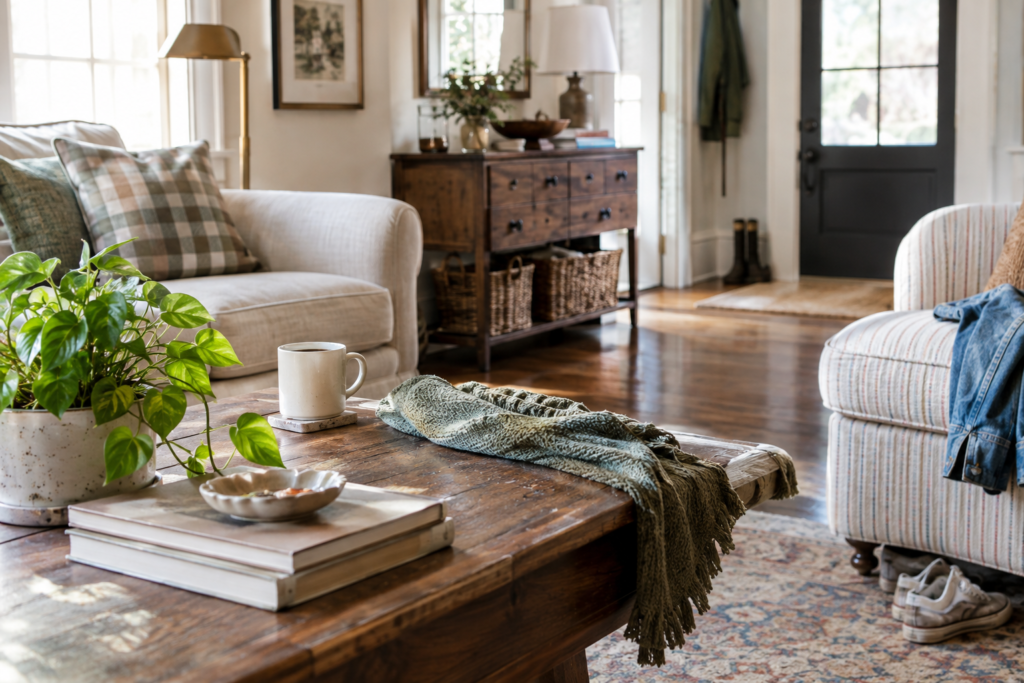
When you see the same pile every day, you stop noticing it. You step around the basket or move the mail to make room for something else, and the space never quite feels finished because the things that belong there are competing with things that are only passing through.
If it keeps happening, it’s worth asking why. Maybe the items don’t have a designated place, or the place you assigned isn’t convenient enough to use. Maybe you need a better landing spot for what everyone brings into the house, or a more useful home for the things you reach for regularly.
I recently saw someone use a bread box to hold chargers and mail, and I thought it was clever because it contains the little things that otherwise spread across a counter. I don’t have room for one on my counters, so I’m looking for a bigger version of the same idea. I’m watching for an antique buffet to replace my sideboard, which has two small drawers and an open shelf and doesn’t hide anything. I need bigger drawers, one to turn into a mail catchall and the other into a charging station.
That’s the useful part of noticing what has become permanent: it gives you a chance to reconsider the arrangement instead of putting things away over and over and watching them return.
If you see the same patterns throughout your house, Why Your House Keeps Falling Behind (Even When You Clean All the Time) looks at why things keep piling up and how to interrupt the cycle. For now, just notice when something temporary has become part of the landscape.
3. Replace or Repair What Has Worn Out
There’s a difference between a home that looks lived-in and one where things have reached the end of their useful lives.
Your house is supposed to show signs of use. People sit on the furniture, cook in the kitchen, take baths, and come in from the garden. You don’t need to replace everything that isn’t new or make every room look like a catalog.
But sometimes a well-used item becomes a worn-out one. The bath mat has lost its shape and the doormat is falling apart. A basket has broken, a towel is fraying, a lampshade is bent. The throw pillows are stained beyond what a good cleaning can fix, or a chair needs a small repair.
Those are the things worth noticing: the ones that no longer serve you well or make the space feel as cared for as you’d like.
My holiday pumpkin pillow is a good example. The cover is fine, but the insert inside has gone nearly flat. The cover even has a zipper, so a new insert would be an easy fix. But for a pillow that comes out 30 to 45 days a year, I’m not sure it’s worth the effort.
You don’t have to replace everything at once. Decide what needs attention.
Sometimes a good cleaning is enough. A small repair may give an item several more years of use. You might move something to a different room or find a cheaper replacement that does the job just as well. And if it still works perfectly well, the best decision may be to keep using it.
When replacement makes sense, prioritize. A bath mat that’s hard to clean or a basket that’s falling apart deserves attention before decorative pillows that are just a little dated. You can also wait for the right item at the right price instead of buying something right away to check it off your list.
This matters most with furniture and decor. It’s easy to see an attractive room online and start noticing everything in your own house that doesn’t look like it. But a home doesn’t have to be updated all at once, and you don’t have to spend money on every imperfection. Replacing one worn-out item can improve a room more than buying several new accessories, and some rooms need nothing at all.
4. Look at the Rooms That No Longer Fit Your Life
Not everything that makes a house feel neglected is neglect. Sometimes the house isn’t worn out. The way you use it just hasn’t kept up with your life.
The entryway has no good place for what everyone brings home. The kitchen storage doesn’t match how you cook. A chair has become a permanent laundry-drop zone, or the guest room has slowly turned into storage. The furniture arrangement made sense five years ago, but your household uses the room differently now.
Cleaning or a few organizing bins won’t fix these. You have to look at the space and ask whether it still works for the people who live there.
We recently rotated the furniture in our living room, and the room became much more functional. We didn’t buy a new sofa or replace anything. We changed where things sat.
I’m also still watching auction sites for that buffet. I need more storage in that spot, and I’d rather wait for the right piece at a good price than rush into a purchase.
Maintaining a home doesn’t always mean keeping everything exactly as it is. Sometimes the best move is to adjust the space to fit the life you’re living now.
That can be as small as moving a lamp, turning a chair, or finding a better place for the things you use most. Bigger changes can wait until you have the time, money, or plan for them. When a room isn’t working, resist the urge to assume you need to buy something. Start with what you already have and how you use the space. A small adjustment may make more of a difference than you expect.
5. Finish the Details You’ve Stopped Seeing

Some things don’t fit the categories above. They aren’t broken, worn out, or in the wrong place. They were just never finished.
A picture frame is still leaning against the wall instead of hanging on it. A box never got unpacked after a move. An empty hook marks where something used to hang, and a seasonal display has been half dismantled for weeks.
One unfinished detail isn’t a problem. The trouble starts when enough of them pile up that the house feels perpetually in progress.
They’re easy to overlook because you see them every day. You walk past the frame, you know the box is there, and you’ve learned to ignore the empty hook. What once caught your eye has become part of the room.
Try walking through your house slowly and asking yourself:
What do I see every day that I’ve stopped seeing?
Don’t fix anything as you go. Just notice. A few things may take minutes to address, others will need more thought, and some may turn out not to matter. You may even find something you no longer want to keep.
This isn’t a hunt for flaws. It’s a chance to see your home with fresh eyes and decide what, if anything, you want to change.
How to Decide What Deserves Your Attention
Once you start noticing, it’s tempting to make a long list and feel as though you’ve created more work for yourself. Try not to. You’re not cataloging every imperfection. You’re looking for the things that would make a difference and deciding what you’re willing to do about them.
I think about three factors: time, effort, and money. A task that takes five minutes and costs nothing is a different proposition from one that takes an afternoon, several trips to the store, or a purchase you haven’t budgeted for.
Start with three questions.
Can I do this now? If the fix is simple, you have what you need, and you have a few minutes, go ahead. Tighten the handle, hang the picture, put the basket where it belongs. Not every small task needs a project plan.
What will this take? Think about the time, effort, and materials. A small hardware purchase may be worth it while a pricier replacement can wait. A task that takes an afternoon deserves more thought than one you can finish before your coffee gets cold.
Is this worth doing now? Not everything you notice needs attention right away. A worn item that still works can stay in use. A room that could function better might be worth rearranging this weekend, or it might wait until you have more time. You’re allowed to prioritize.
You can approach this in two ways, depending on what feels manageable.
Option 1: Walk through the whole house.
Take a slow walk with a notebook or your phone and ask:
- What needs fixing? Small repairs, loose parts, damaged surfaces, unfinished details.
- What needs putting away or dealing with? Items that have settled in the wrong places, unfinished projects, piles, and things waiting for your next trip out of the house.
- What needs refreshing? Worn-out belongings and rooms that could work better.
Write down what you notice without committing to doing it all. When you’re finished, choose three to five items to address first and leave the rest for another time.
Option 2: Work through one room at a time.
If a whole-house walk feels like too much, start with one room, either one you use often or one that has been bothering you lately. Ask the same questions, pick a few things that would make a difference, and decide what to do about them.
You might finish in one sitting, or you might find a bigger change that needs to wait. Either way, you’ve made a decision instead of carrying around a vague sense that the whole house needs attention.
Neither approach is better than the other. Choose the one that lets you see what needs attention without turning it into a huge project.
Some of what you notice will need more than a quick fix: a repair to schedule, a recurring issue to track, a maintenance task that needs a more reliable place in your routine. For those, A Simple Home Maintenance System: What to Notice, Schedule, Track, and Repair is the next step.
Your House Doesn’t Have to Be Finished
A home is never completely finished. People live there, things wear out, needs change, and new projects take the place of old ones. There will always be something that could be repaired, rearranged, or replaced.
Fix the easy things, make a plan for the bigger ones, and leave the rest for another day. Sometimes a room needs a new arrangement, sometimes an item needs repairing, and sometimes you just need to finish the little job you’ve been meaning to do for the past two years.
This week, take a walk through your house. Don’t clean or organize. Just notice.
What have you stopped seeing that you’d like to address?